


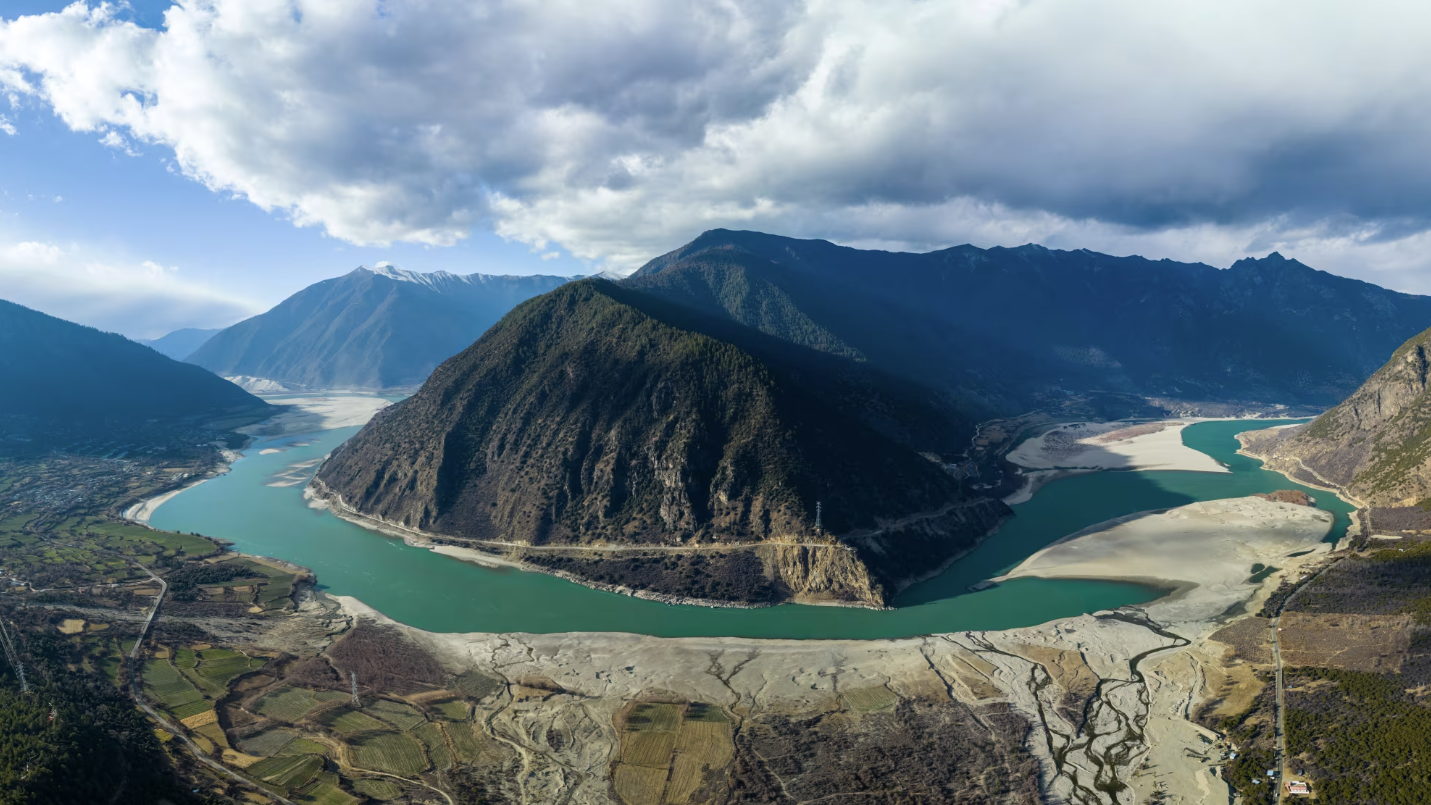
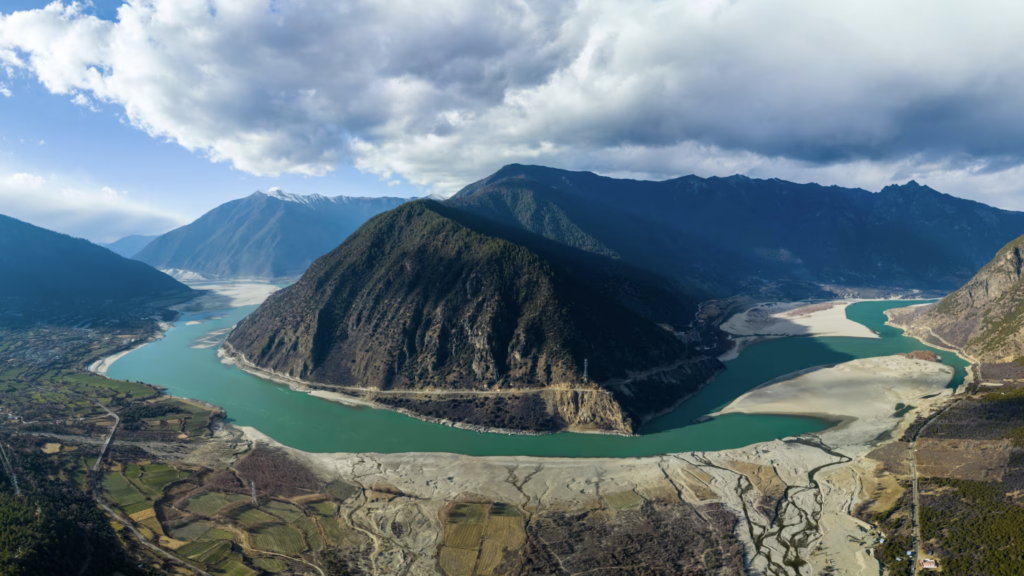
Hundreds of miles from China’s populous coastline, a sharp bend in a remote Himalayan river is set to become the centerpiece of one of the country’s most ambitious – and controversial – infrastructure projects to date.
There, a $168 billion hydropower system is expected to generate more electricity than any other in the world – a vast boon for China as it hurtles toward a future where electric vehicles dominate its highways and power-hungry AI models race to out-compute international rivals.
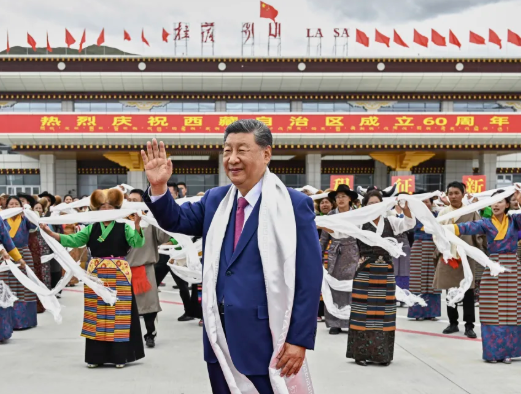
Chinese leader Xi Jinping called for the project to be “advanced forcefully, systematically, and effectively” during a rare visit earlier this year to Tibet, a region where Beijing continues to tighten its grip in the name of economic growth and stability.
Experts say the hydropower system, built in the lower reaches of Tibet’s Yarlung Tsangpo river, will be a feat of engineering unlike any ever undertaken. Leveraging a 2,000-meter altitude drop by blasting tunnels through a mountain, it will enable China to harness a major river in a region known as Asia’s water tower and at a time when governments are sharpening their focus on water security.
The project could aid global efforts to slow climate change, by helping China – now the world’s largest carbon emitter – wean off coal-powered energy. But its construction could also disrupt a rare, pristine ecosystem and the ancestral homes of indigenous residents.
Tens of millions of people also depend on the river downstream in India and Bangladesh, where experts say the potential impact on the ecosystem, including on fishing and farming, remain understudied.
Headlines in India have already dubbed the project a potential “water bomb” – and its proximity to the disputed China-India border put it at risk of becoming a flashpoint in a long-simmering territorial dispute between the two nuclear-armed powers.
Despite these stakes, the project remains shrouded in secrecy, deepening questions about a plan that shows China’s immense technical capabilities and drive for clean energy, but also its lack of transparency, even when it comes to an undertaking with potentially far-reaching consequences.
Clues about the project’s design – both referenced in official or scientific reports and from open-source information compiled by CNN – suggest a complex system that could include dams and reservoirs along the Yarlung Tsangpo river, as well as a series of underground hydropower stations connected by tunnels, harnessing energy as a diverted portion of the river makes a steep elevation decline.
“This is the most sophisticated, innovative dam system the planet has ever seen,” said Brian Eyler, director of the Energy, Water, and Sustainability Program at the Stimson Center think tank in Washington. “It’s also the riskiest and potentially the most dangerous.”
China disagrees. In a statement to, its Ministry of Foreign Affairs said that the project had “undergone decades of in-depth research” and “implemented thorough measures for engineering safety and ecological protection to ensure it will not adversely affect downstream areas.”
“Since the initial preparation and official commencement of the project, the Chinese side has always maintained transparency regarding pertinent information and has kept open lines of communication with downstream countries,” the ministry said, adding that “as the project progresses” Beijing would “share necessary information with the international community” and “strengthen communication and cooperation with downstream countries.”
The project, it said, “aims to accelerate the development of clean energy, improve local livelihoods, and actively address climate change.”
But Beijing may have other priorities in mind, too. The ambitious infrastructure move comes as Xi pushes to shore up national security not just by ensuring China’s energy supply – but also tightening control along disputed borders and regions home to ethnic minorities.
“If you connect the dots of Chinese infrastructure development in the Himalayas, especially in areas where China borders India along Tibet, they are strategically placed,” said Rishi Gupta, assistant director at the Asia Society Policy Institute in New Delhi.
“The project aligns with China’s broader goal of leveraging its natural resources to consolidate control over critical regions like Tibet and its borders.”
Power play in the Himalayas
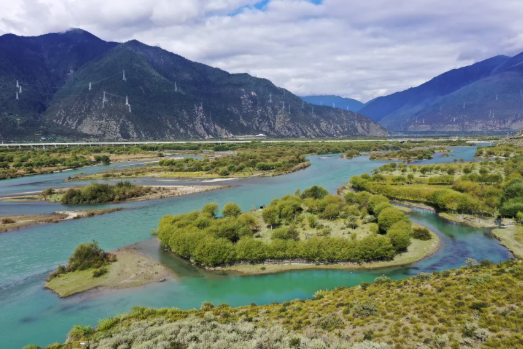
Known as the world’s highest major river, the Yarlung Tsangpo winds its way from a glacier in the Himalayas across the plateau that cradled Tibetan Buddhism, and toward the country’s southernmost edge.
One stretch of the river, tucked alongside Tibet’s de facto border with an Indian state whose land China claims, has long drawn attention for its power-generating potential.
There, the waterway makes a dramatic horseshoe turn as it wraps around a mass of mountains at what’s known as the Great Bend – a trajectory that sees the river lose some 2,000 meters in altitude within roughly 50 kilometers.
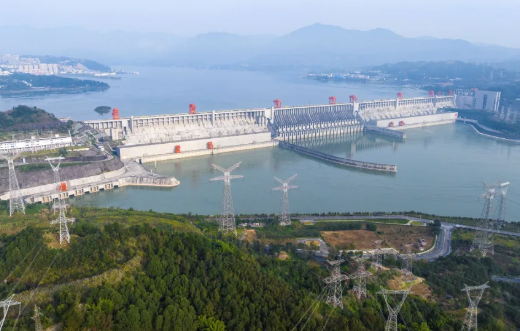
That descent has been estimated to have the potential to generate some 300 billion kilowatt-hours of electricity annually – roughly triple the output of China’s Three Gorges Dam, currently the world’s most powerful.
The hydropower development on the lower Yarlung Tsangpo “isn’t merely a hydropower initiative,” it is also a national security project, encompassing water resource security, territorial security, and more, Yan Zhiyong, then chairman of the Power Construction Corporation of China (PowerChina), said in a 2020 speech, according to Chinese state media publication.
Such a project along the river’s lower reaches has been talked about for decades but never attempted – long seen as a notoriously challenging undertaking in a remote and treacherous area, difficult even for a country that leads the world in building mega-dams.
Now, satellite images, publicly available corporate documents, and social media posts from the area reviewed by CNN show work is underway building and widening roads, constructing bridges, erecting storage facilities for explosives, expanding cell service and relocating villagers – all apparent efforts to make way for construction, which officially began in July.
Official documents often refer to the project using the Roman initials “YX” to denote an abbreviation for the lower reaches of the Yarlung Tsangpo, but they provide limited information about its design. State media has said the project primarily employs a method of “straightening and diverting the river” through tunnels and includes five cascade hydropower stations.
CNN’s examination of open-source information, including academic research papers, official tenders, patents for power station designs filed by a subsidiary of PowerChina, a local town planning document, as well as satellite imagery and social media posts from the area has shed more light on how this expansive project may be taking shape.
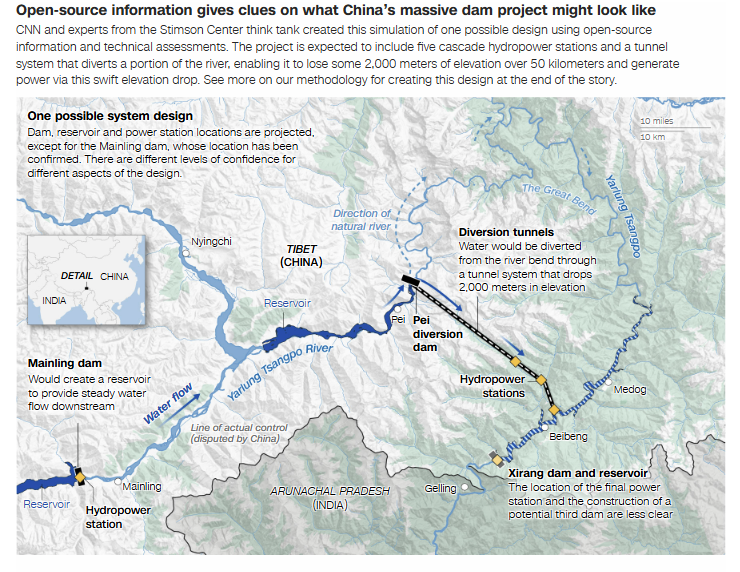
A simulation based off this information and produced in conjunction with experts at the Stimson Center’s Energy, Water, and Sustainability Program, who provided technical and geographic analysis, suggest the design could be a sprawling system of hydropower stations, tunnels and reservoirs, which together could span some 150 kilometers as the crow flies from the first to the final power station.
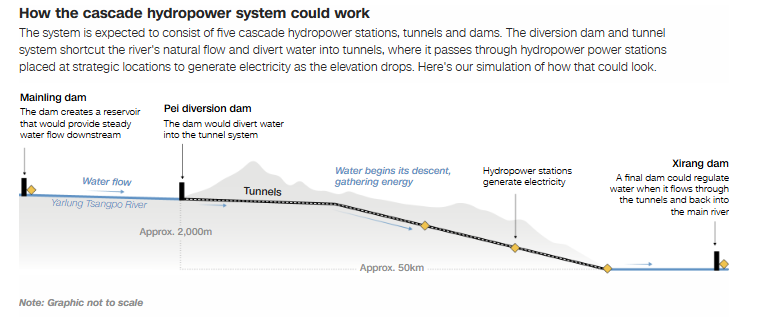
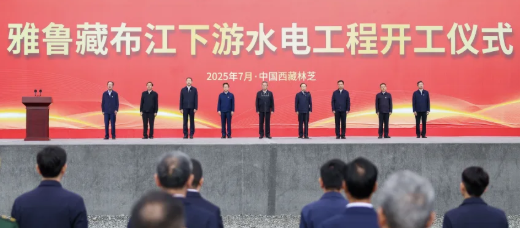
That system would begin with a reservoir created by a dam at Mainling city, where Chinese Premier Li Qiang attended a groundbreaking ceremony for the project in July. The reservoir there – which could stretch dozens of miles according to the simulation – would enable operators to regulate the water flow throughout the hydropower system.
A second, lower dam, located further downstream and past a protected national wetland, would likely be used to divert a portion of the river away from the Great Bend and into a system of tunnels blasted through mountains and beneath an adjacent valley, according to the simulation of the potential design.
Here, the diverted water would likely pass through a series of cascade power stations, each hundreds of meters lower in elevation than the last – generating immense power along the way before rejoining the main river once again.
The exact locations of all five stations are unknown, as is how much land will be inundated by reservoirs to create this system.
Another key question for such a design is whether the system will have a final dam and power station that will allow operators to control the overall flow of the main river before it traverses countries downstream.
Experts say that a final dam, which could include a power station and be located closer to the de facto border with India, would be an optional addition to the main project because of the cost, challenges and potential risk.
A paper by Chinese government scientists published in the Nature journal Communications Earth & Environment earlier this year appeared to confirm that two reservoirs upstream of the diversion tunnels will regulate how much water goes into those tunnels, while a third, downstream, will regulate the water as it flows back into the main river. But experts stress that until China releases more details, independent efforts to assess the project can only be based on best guesses.
“With what we know it is nearly impossible to understand (or) evaluate the possible impacts that the project will have,” said Rafael Jan Pablo Schmitt, a hydropower expert at the University of California–Santa Barbara, who discussed the simulation with CNN and the Stimson Center.
What is clear is that to build the hydropower system, Chinese engineers and hydrologists will need to operate in notoriously challenging conditions. The river runs through one of the world’s most seismically active regions, where even the mountains themselves are continuing to grow by millimeters each year – risking disruption to carefully calibrated engineering.
“The challenge will be to build a system that can mitigate or avoid safety risk,” said Eyler. “The system is very complicated. There’s a lot of concrete poured for multiple dams and tunnels cutting through seismically active mountains. China prioritizes dam safety … but can you mitigate risk in the Himalayas?”
Landslides, debris flows and glacial lake outburst floods are all features of the area that are becoming more unpredictable with climate change and have the potential to damage infrastructure and put people downstream at risk if the project can’t cope.
Experts say Chinese engineers are among the best in the world and will have designed mitigation efforts for earthquakes and other hazards – but those will be untested in such an environment.
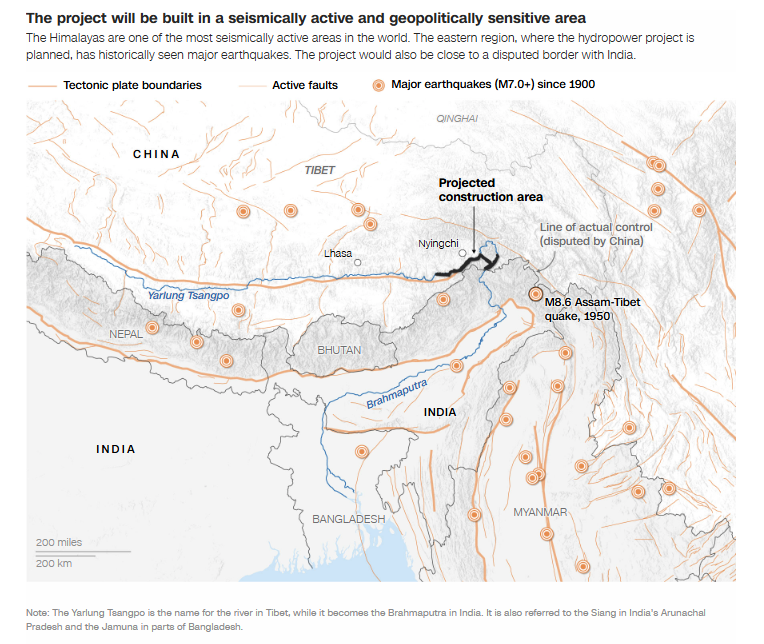
“It’s just staggering that (Chinese officials) would commit to building this that far out in such a challenging geopolitical and geotechnical environment,” said Darrin Magee, a scholar of Chinese hydropower at Western Washington University in the US. “If China’s leadership is now convinced that it can go toe to toe with the world’s leading AI developers … it’s nice to have a basically unlimited source of electricity in your back pocket,” he added.
And as Beijing looks to swap imported petroleum for home-grown electricity, “they’re betting on a payoff that’s going to last decades,” Magee said.
‘Immense’ risk: the Great Bend
China has a history of building complex and controversial dams.
The Three Gorges project – a dam rising nearly half the height of the Empire State Building – required uprooting more than a million people before it began operation in 2003, and has had a mixed record on flood control, despite promises that it would serve this purpose.
Today, China’s rivers are dotted with hydropower projects, while cutting-edge transmission lines carry high-voltage electricity from rural and mountainous regions to the skyscrapers, AC units and electric vehicles of urban China.
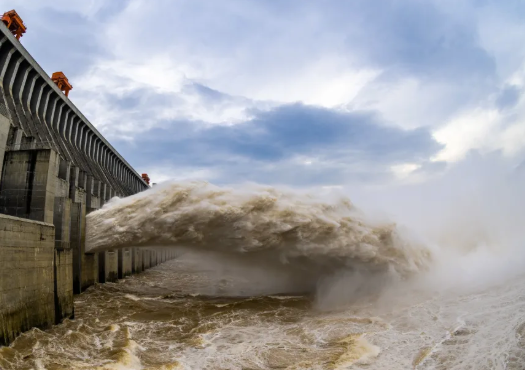
Nearly a third of the total installed capacity of hydropower globally as of 2024 was in China, and the country is on track to meet targets for new capacity early – part of Xi’s push to electrify China as he aims for ambitious climate goals and energy security.
In Tibet, Chinese authorities aim to transform the region into a green energy hub. In that vision, hydropower is linked to sprawling installations of solar and wind farms that are used to power a high-altitude supercomputing industry and send electricity eastward, while “boosting local people’s livelihood and prosperity.”
But this plan also places the infrastructure needed for China’s technological and energy transition in the heart of an ecologically sensitive region.
At the Great Bend, the Yarlung Tsangpo is bound on two sides by the world’s deepest canyon, cut into a landscape of pristine forest flanked by mountains and designated one of China’s national-level nature reserves.
There, towering cypress trees have grown for hundreds of years and vulnerable or endangered species like Bengal tigers, clouded leopards, black bears, and red pandas live in habitats that morph with the rising geography – and new plant and animal species continue to be discovered.

“The Great Bend of the Yarlung Tsangpo is one of the most extraordinary geological and ecological phenomena on the planet,” said Ruth Gamble, an environmental, cultural and climate historian of Tibet at La Trobe University in Australia. “Within a couple of hundred kilometers you go from peaks of nearly 8,000 meters to tropical jungles.”
For years, scientists and rights groups have raised concerns about infrastructure development in this area.
In a paper published last year, scientists from Peking University in Beijing called for extensive biodiversity surveys to be “urgently conducted before the dam project commences” so that the “value of local nature is sufficiently identified and the dam’s environmental impacts can be accurately assessed.” The corresponding authors did not respond to a CNN request for comment.
German-based rights group the Society for Threatened Peoples earlier this year sent a letter to the United Nations Human Rights Council accusing China of violating its own regulations that restrict placing production facilities in core or buffer zones of nature reserves.
Beijing earlier this year said the project “strictly adhered” to an ecological protection law and included an “advanced environmental monitoring system” to prevent impacts on “key ecological zones and the habitats of rare wildlife.”


A company notice reviewed by CNN showed that a state-owned entity involved with constructing the project was seeking technical consulting services to assess biodiversity impacts. The notice, dated October last year, wrote that such an assessment was a “prerequisite” for obtaining a construction permit as the hydropower base “cannot avoid the nature reserve” area of the canyon. The results of an assessment do not appear to have been made public.
During his visit to Tibet in July, Premier Li exhorted those involved in the project to “ensure that the ecological environment is not damaged.” But experts question how infrastructure of this scale could not have an impact.
“Rivers don’t stop at national park borders, and neither do snow leopards or other types of animals, or even plants and trees,” said Gamble.
‘The memories stay behind’
Another looming question is how deeply the project will disrupt the region’s people, some of whom have lived for generations in a corner of the country largely untouched by China’s infrastructure ambitions.
Several tens of thousands of people live in the counties where the projects will be built, among them indigenous groups including the Monpa and Lhoba people, two of the country’s smallest officially recognized ethnic minorities.
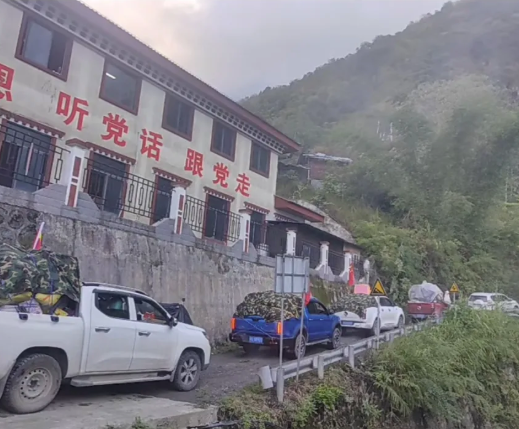
Chinese officials have acknowledged the project will require “relocating local communities” in Tibet and said “new places of worship” had been located near “newly built residential areas” – a sign of the disruption to daily and cultural life associated with the project.
Local officials have reported verifying household registrations for the eventual village relocation and say they are scrambling to document what they described on social media as a surge of migrant workers attracted by the project.
Governments in Mainling city and Medog county, where the downstream section of the project is being built, both issued warnings to “crack down harshly” on any crimes that could disrupt a “major national construction project.”
In Medog county, videos posted by social media users show long lines of cars and trucks flying Chinese flags and propaganda banners, transporting villagers from their hometown to new abodes closer to the de facto China-India border.
“Moving takes people and belongings, but the memories stay behind,” one woman who said she was being relocated wrote on social media. “Arriving at the new location, I feel a mix of emotions, unsure when I’ll be able to visit my hometown again,” she said.
It’s unclear if these residents’ homes will be directly impacted by dam construction, but that social media user wrote they were moving due to the “hydropower project.” Beijing has also in recent years presided over a policy of relocating villages to fortify or in some cases expand its claim along disputed boundaries.

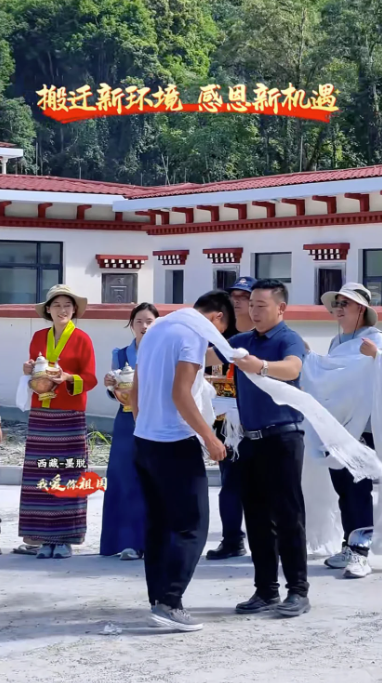
China’s Foreign Ministry earlier this year said Beijing’s resettlement plan for the project would “prioritize the rights, participation, and well-being of affected residents” and “respect local religious beliefs and cultural heritage by strategically avoiding religious sites.” State news agency Xinhua has said the project would help the economy and “create new jobs,” thus “enhancing the sense of gain, happiness and security for people of all ethnic groups.”
But the risks from hydropower projects on the local communities “are immense,” according to Tempa Gyaltsen Zamlha, deputy director of the Tibet Policy Institute in Dharamsala, the town in India where the Dalai Lama, the exiled Tibetan spiritual leader, and his loyalists reside.
“People could face forced displacement from their ancestral homes … destruction to the source of local income, destruction of local ecological balance and wildlife habitat, influx of migrant workers from China replacing the local population in the region,” he said.
‘Water bomb’ worries downstream
Concerns about the project are also being acutely felt downstream in India, where the Yarlung Tsangpo becomes known as the Brahmaputra – a mighty waterway that supports fishing and farming in India and Bangladesh before ultimately emptying into the Bay of Bengal.
The top official in India’s Arunachal Pradesh, just over the de facto border from Tibet, warned in July that the dam posed an existential threat to the people of the region and could be used as a “water bomb” by China.
“China cannot be trusted. No one knows what they will do and when,” Chief Minister Pema Khandu said in an interview with the Press Trust of India, pointing to how releasing or withholding water could overwhelm or dry out his region.
In New Delhi, officials earlier this year said they were “carefully monitoring” China’s hydropower plans and vowed “necessary measures to protect our interests, including preventive and corrective measures to safeguard life and livelihood of Indian citizens.” CNN has reached out to India’s Ministry of External Affairs for comment on the project and China’s information and data sharing around it.
The situation also threatens to upset a complicated diplomatic balance between China and India as they try to ease tensions along their heavily militarized border. During a meeting in New Delhi in August, top officials from both sides discussed “trans-border rivers cooperation,” and China agreed to share hydrological data “during emergency situations,” according to an Indian government readout.
China already has a controversial track record of running dams along another transnational river, the Mekong. Its operators there have been accused of causing drought in Vietnam by using reservoirs and dams to manipulate the river to maximize power-generation – a claim Beijing denies.
For the YX project, Chinese researchers and officials have played up its potential to mitigate flood risk, saying it could help safeguard downstream regions as flooding becomes more uncertain due to climate change.
Experts agree an upstream dam could have a positive impact on flooding – a major issue in both India and Bangladesh, where extreme floods during monsoon seasons take lives and devastate crops and homes across the countries’ densely populated floodplains – but say it’s impossible to know without more information.
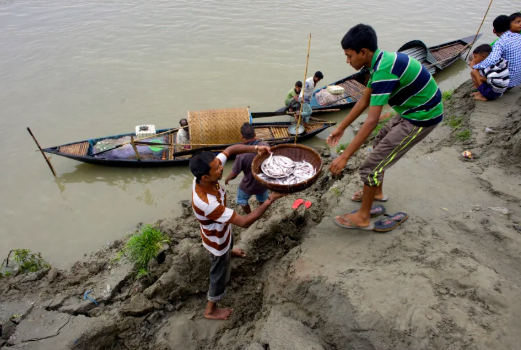
“While the dam could potentially regulate monsoon floods, mismanagement – such as sudden water releases – might intensify flood risks,” said water governance expert Anamika Barua, a professor at the Indian Institute of Technology Guwahati in Assam, another Indian region traversed by the river. “Transparent data sharing and cooperative management will be critical to reducing disputes.”
And while the Brahmaputra draws most of its waters from tributaries and monsoon rains rather than the Yarlung Tsangpo, changes in the waterflow upstream could disrupt the natural pulse of the river and the kind of sediment and fish it carries – key elements for the river and delta ecosystems downstream.
For those living just over the de facto border, the vast unknowns about China’s project are already having an impact.
There, officials from India’s largest state-backed hydropower firm are pushing forward their own project – a 11,200 megawatt dam on the same river – spurred by the hydropower development upstream.
That project would require relocating villages home to indigenous groups that rely on farming for subsistence – and has sparked local opposition and concern, according to people familiar with the situation.
“They keep saying ‘China this’ and ‘China that,’ but we don’t even know what China is building,” Tagori Mize, a spokesperson for a local indigenous farmers group told CNN. “We are not even being told where we will live. Nothing is clear.”
With both countries preparing their projects, experts like Stimson’s Eyler see another outcome from China’s push: a dam-building race.
“If the two countries could work together on the overall design of the mega-dam system, then some risk could be avoided,” he said. But otherwise, for the river, “a dam building race between India and China is a race to the bottom.”
El Velo Levantado: Cómo el Fraude Inmobiliario y la Corrupción Minan la Confianza en la Inversión Pública
Como experto en la intersección de las finanzas corporativas, la inversión inmobiliaria y el cumplimiento normativo, con una década de experiencia analizando y asesorando en casos de alta complejidad, he sido testigo de la evolución de las tramas de corrupción. En un panorama económico cada vez más globalizado y digitalizado, donde la transparencia es una divisa preciada, las revelaciones sobre esquemas de fraude inmobiliario y malversación de fondos públicos continúan emergiendo, sacudiendo los cimientos de la confianza empresarial y ciudadana. El reciente desarrollo de la llamada “Trama Leire” en España, con sus tentáculos alcanzando la inversión en bienes raíces en localidades tan diversas como Jaca y Marbella, no es solo una noticia; es un estudio de caso paradigmático sobre los riesgos inherentes y las sofisticadas metodologías detrás de la corrupción sistémica.

La magnitud de este tipo de incidentes trasciende las fronteras geográficas. Si bien este caso se centra en España, las lecciones y advertencias son universalmente aplicables, resonando con los desafíos que enfrentamos en mercados vibrantes como el mexicano. La ingeniería de este tipo de fraude inmobiliario demuestra una audacia y una planificación que requieren una vigilancia constante y una mejora continua en las estrategias de prevención y detección.
El Corazón del Escándalo: Desentrañando la Trama “Hirurok”
La investigación de la Audiencia Nacional, liderada por el juez Antonio Piña, ha puesto al descubierto una presunta red de influencias y cobro de comisiones ilegales orquestada por un grupo autodenominado “Hirurok”. En el centro de esta maraña se encuentran figuras con acceso estratégico y capacidad de maniobra en la administración pública: la exmilitante del PSOE Leire Díez, el expresidente de la Sociedad Estatal de Participaciones Industriales (SEPI) Vicente Fernández, y el empresario Antxon Alonso. Su presunta operación, que se estima les habría permitido hacerse con más de 700.000 euros en comisiones, es un recordatorio sombrío de cómo la confianza depositada en cargos públicos y empresariales puede ser pervertida para el enriquecimiento ilícito.
Mi experiencia me ha enseñado que estos grupos no operan al azar. La denominación “Hirurok” (que significa “los tres” en euskera) sugiere una cohesión y una estrategia deliberada. La clave de su modus operandi, según las pesquisas de la Unidad Central Operativa (UCO) de la Guardia Civil, residía en la capacidad de “orientar diversos expedientes seguidos en la Administración pública”, aprovechando posiciones, relaciones y una calculada influencia sobre personas clave. Este es un punto crítico: la manipulación de procesos administrativos y la subversión de la función pública son el caldo de cultivo ideal para el fraude inmobiliario y la corrupción a gran escala.
La Maquinaria del Engaño: Contratación Mendaz y Blanqueo de Capitales
La resolución judicial detalla cómo este sistema se perfeccionaba a través de la “contratación y facturación mendaz”, una técnica clásica pero efectiva en esquemas de delitos económicos. La mercantil “Mediaciones Martínez” emerge como un nodo central en la canalización de los fondos ilícitos. Este tipo de empresas “fachada” o instrumentales son herramientas comunes en el blanqueo de capitales, diseñadas para difuminar el origen de los recursos y hacer un seguimiento casi imposible sin una investigación forense profunda.
La actividad de este grupo se habría extendido entre 2021 y 2023, proyectándose a “distintos puntos del territorio nacional” y abarcando “varias administraciones públicas”. La adopción de “medidas de seguridad para garantizar la más discreción y confidencialidad” subraya la naturaleza profesional y planificada de la operación. En el mundo del fraude inmobiliario moderno, la sofisticación de estas redes es cada vez mayor, empleando desde estructuras societarias complejas hasta el uso de tecnología para evadir la detección. Por ello, la auditoría forense corporativa y la consultoría riesgos financieros se vuelven herramientas indispensables para cualquier entidad pública o privada.
Un Mosaico de Oportunidades Ilícitas: Las Cinco Operaciones Clave
La investigación ha identificado al menos cinco operaciones donde el grupo habría logrado “decisiones favorables a sus intereses” desde diversas administraciones. Cada una de ellas es un ejemplo de cómo la corrupción puede infiltrarse en distintos niveles y sectores, culminando en un sofisticado fraude inmobiliario.
El Rescate de Tubos Reunidos (112,8 millones de euros): La primera operación destacada es la concesión de un rescate por parte de la SEPI a la empresa Tubos Reunidos. Aquí, el grupo “Hirurok” habría actuado como “intermediario” para asegurar la ayuda, percibiendo 114.950 euros a través de facturación, nuevamente, “aparentemente mendaz”. Esto plantea serias preguntas sobre la integridad de los procesos de adjudicación de ayudas públicas y la necesidad de una due diligence inmobiliaria y financiera exhaustiva en todas las fases. Cuando los fondos públicos se destinan a rescatar empresas, la supervisión debe ser máxima para evitar la creación de oportunidades para el fraude inmobiliario encubierto.
Servinabar y la Sede de Mercasa (18.119,75 euros): Este caso implica la adjudicación de un contrato público por parte de Mercasa a Servinabar, una empresa propiedad de Antxon Alonso. El contrato, supuestamente para un “informe técnico” sobre la sede de Mercasa que cuantificaría “de manera elevada el coste de las obras de rehabilitación”, habría sido “innecesario”. La estrategia aquí es clara: generar una justificación ficticia para un gasto que, en realidad, solo servía para canalizar fondos hacia el grupo. Esta táctica es un ejemplo clásico de malversación de fondos y tráfico de influencias, donde el valor real de un servicio es distorsionado para crear un margen para las comisiones. En la lucha contra el fraude inmobiliario, la vigilancia sobre la valoración pericial inmuebles y la necesidad de los servicios contratados es fundamental.
Adjudicación a Eriberri por el PEPA (2,8 millones de euros): La tercera adjudicación se refiere al Parque Empresarial Principado de Asturias (PEPA), a favor de una UTE que incluía a Construcciones y Excavaciones Erriberri. Los investigadores creen que los miembros de “Hirurok”, a través del presidente de la mesa de contratación, manipularon el proceso para beneficiar a Eriberri. A cambio, la empresa habría canalizado 400.000 euros al grupo, a menudo utilizando “operativas que tenían la aparente finalidad de encubrir el origen de los fondos y provocar una desconexión entre este origen y sus destinatarios finales”. Este escenario es un terreno fértil para el blanqueo de capitales y el fraude inmobiliario, donde los contratos públicos se convierten en herramientas para desviar recursos.
Pagos de Enusa a un Despacho de Abogados (17.545 euros): Aquí, el foco recae en pagos desde la empresa pública Enusa a un despacho de abogados, SDP Carrillo y Montes. La operativa se tejió mientras Acciona mostraba interés en explotaciones de Enusa. El grupo investigado y directivos de Enusa habrían influido en la contratación del despacho, generando “sobrecostes aparentemente cuantificados en el 50% del importe del contrato”. Estos sobrecostes habrían sido luego canalizados a sociedades vinculadas a “Hirurok”, con el despacho realizando pagos a “Mediaciones Martínez”. Es un ejemplo de cómo incluso los servicios profesionales, como la asesoría legal inversión inmobiliaria, pueden ser cooptados y utilizados como conductos para el desvío de fondos en un esquema de fraude inmobiliario más amplio.
Ayuda de Sepides para Forestalia (17,32 millones de euros): Finalmente, la resolución menciona una ayuda concedida por Sepides a Arapellet, del grupo Forestalia. Se habría pactado previamente el pago de 200.000 euros a favor de “Hirurok”, nuevamente canalizados a través de “Mediaciones Martínez”. Esta operación subraya cómo la financiación pública y las subvenciones pueden ser instrumentalizadas para el beneficio personal, distorsionando los objetivos de desarrollo económico y social. La prevención blanqueo capitales y la estrategias anticorrupción deben aplicarse rigurosamente en la concesión de cualquier ayuda estatal.
El Destino Final: Inversiones Inmobiliarias en Jaca y Marbella como Lavado de Dinero
La parte más reveladora de la investigación, y la que directamente conecta con el concepto de fraude inmobiliario, es el destino de estos fondos ilícitos. El juzgado sostiene que “la mayor parte de esos fondos fueron canalizados para efectuar inversiones inmobiliarias en Marbella (Málaga) y Jaca”. Estas propiedades son “presumiéndose actualmente como inversiones comunes y, por lo tanto, ligados a los tres investigados”. Esta es una maniobra clásica de lavado de dinero, donde los activos obtenidos ilegalmente se “limpian” invirtiéndolos en bienes raíces, un sector tradicionalmente atractivo por su capacidad de absorber grandes sumas de dinero y de ofrecer una apariencia de legitimidad.
Marbella, con su reputación como centro de lujo y su mercado inmobiliario dinámico, y Jaca, con su atractivo como destino de montaña, ofrecen oportunidades perfectas para la especulación inmobiliaria y el fraude inmobiliario encubierto. La compra de propiedades a través de empresas pantalla o testaferros, la declaración de precios inflados o subvaluados, y la posterior venta, son tácticas para reintroducir dinero sucio en la economía legal. La dificultad para rastrear el origen de los fondos en transacciones inmobiliarias, especialmente en efectivo o a través de complejas estructuras corporativas, lo convierte en un objetivo primordial para las organizaciones criminales.
Además de las propiedades, se ha determinado que una parte de los fondos fue directamente a los miembros del grupo de forma individual. Por ejemplo, el expresidente de la SEPI habría recibido “al menos 49.350 euros a través de una serie de transferencias e ingresos en efectivo”, lo que resalta la naturaleza dual de estas operaciones: una parte para el blanqueo de capitales y otra para el disfrute directo del botín.
Las Consecuencias Legales y el Impacto en la Integridad
Los implicados en la “Trama Leire” enfrentan graves acusaciones: prevaricación, malversación, tráfico de influencias y organización criminal. Aunque han sido puestos en libertad con medidas cautelares como la retirada de pasaporte y comparecencias quincenales, la investigación sigue su curso y las consecuencias legales podrían ser severas. La Fiscalía Anticorrupción, al impulsar esta causa, envía un mensaje claro: la impunidad no tiene cabida en un estado de derecho.
Más allá de las ramificaciones legales individuales, el impacto de este tipo de fraude inmobiliario y corrupción se siente a nivel macroeconómico y social. Minan la confianza en las instituciones públicas, distorsionan el mercado, desincentivan la inversión legítima y, en última instancia, perjudican a los ciudadanos al desviar fondos que podrían haberse destinado a servicios esenciales o proyectos de desarrollo. Para cualquier inversor o empresa que busca operar con integridad, la seguridad jurídica inversión México o en cualquier otra jurisdicción, depende directamente de la robustez de los marcos anticorrupción.
Hacia un Futuro Más Transparente: Prevención y Detección en 2025 y Más Allá
El caso “Leire” y sus vinculaciones con el fraude inmobiliario en Jaca y Marbella nos ofrecen valiosas lecciones para el futuro, especialmente para 2025 y los años venideros. La lucha contra la corrupción y el blanqueo de capitales exige un enfoque multifacético:
Fortalecimiento del Cumplimiento Normativo (Compliance): Las empresas, especialmente aquellas que interactúan con el sector público, deben invertir en programas de cumplimiento normativo empresas robustos. Esto incluye la implementación de códigos de conducta estrictos, políticas claras de regalos y hospitalidad, y mecanismos efectivos para la denuncia de irregularidades.
Tecnología y Análisis de Datos: La inteligencia artificial y el análisis de Big Data son herramientas cada vez más potentes para detectar patrones sospechosos en transacciones financieras y propiedades. Los software detección fraude pueden identificar anomalías que pasarían desapercibidas para el ojo humano, permitiendo una acción temprana contra el fraude inmobiliario.

Auditorías Externas y Due Diligence: La realización de auditorías forenses corporativas regulares y una due diligence inmobiliaria exhaustiva antes de cualquier inversión o contratación son esenciales. Esto va más allá de la revisión superficial, implicando la verificación del origen de los fondos, la reputación de las contrapartes y la transparencia de las estructuras societarias.
Colaboración Público-Privada: La cooperación entre las autoridades reguladoras, las fuerzas del orden y el sector privado es crucial. Compartir información y mejores prácticas puede fortalecer los mecanismos de prevención y acelerar las investigaciones.
Educación y Capacitación: Es fundamental capacitar a los profesionales del sector inmobiliario, financiero y legal en la identificación de señales de lavado de dinero y fraude inmobiliario. Los abogados fraude inmobiliario y los consultores especializados tienen un papel vital en guiar a las empresas a navegar este complejo panorama.
En mercados emergentes y en desarrollo, como el mercado inmobiliario México, la importancia de estas medidas es aún mayor. La regulación inmobiliaria México y la efectividad de sus organismos de control son determinantes para asegurar un ambiente de inversión seguro y transparente. Mi experiencia me dice que la inversión en prevención blanqueo capitales y estrategias anticorrupción no es un gasto, sino una inversión en la reputación, la sostenibilidad y el valor a largo plazo de cualquier organización.
Conclusión: Un Llamado a la Vigilancia y la Integridad
El caso de la “Trama Leire” es un eco persistente de los desafíos que enfrenta la integridad en la inversión pública y el sector inmobiliario a nivel global. Nos recuerda que el fraude inmobiliario y la corrupción no son fenómenos aislados, sino redes complejas que buscan explotar las debilidades del sistema. Como profesionales y ciudadanos, tenemos la responsabilidad de exigir y construir entornos más transparentes y éticos. La vigilancia, la inversión en sistemas de compliance anticorrupción y el compromiso con la recuperación activos ilícitos son más que nunca la base para un futuro económico próspero y justo.
Si su organización busca fortalecer sus defensas contra el fraude inmobiliario y la corrupción, o necesita asesoría experta en gestión de riesgos financieros y cumplimiento normativo, le invito a contactarme. La proactividad hoy es la mejor garantía contra las vulnerabilidades del mañana.