


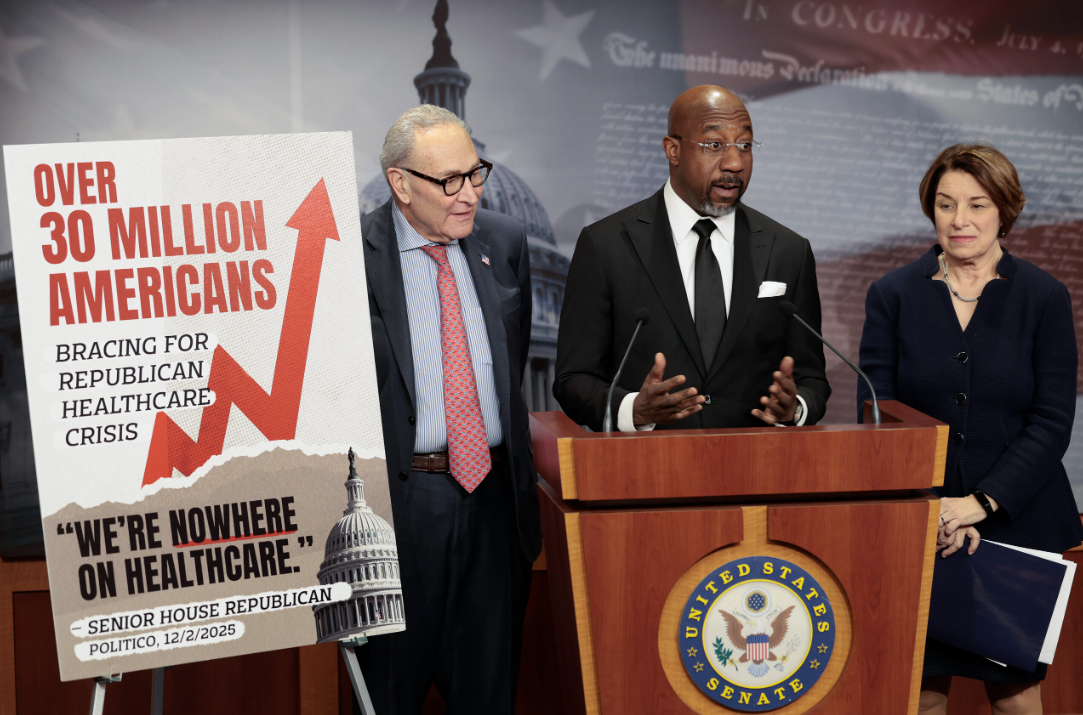
Health insurance costs will skyrocket for millions of Americans if certain tax credits expire. Small business owners and the self-employed will be hit especially hard.
Jimmy Pang has spent the past few months trying to map out a long-term plan to keep his health care while growing his physical therapy practice in San Diego.
It’s a conundrum millions of small business owners and self-employed Americans are now facing. Health care through the federal Affordable Care Act is getting more expensive, and the tax credits that helped make it affordable will shrink or disappear in 2026. The change comes after a Republican-led Congress refused to extend the enhanced credits despite pleas from voters and a sustained push from Democrats that shuttered the government.
“I have chronic health issues, and I am very dependent on my health insurance,” said Pang, who suffers from chronic headaches and pain. “I’m seen by multiple specialists. That is the biggest thing for me.”
Pang pays about $350 a month for his plan through the federal health care exchange, and a $350 subsidy pays for the rest. Next year, he estimates he’ll pay $750 a month and may qualify only for a $50 subsidy because he moved his therapy practice from the Bay Area to San Diego to be close to his family. He expects 2027 to be even worse, with no subsidy and monthly costs of around $800 or more.
Covered California estimates that on average, consumers will see a 97% increase in premiums in 2026 without the enhanced tax credits. The state expects to lose $2.5 billion in enhanced premium tax credits, the state exchange reported.
The changes will be especially tough for the millions of small business owners and self-employed workers across the U.S.. They are three times more likely than others to rely on the health care exchange for their own care, according to the Treasury Department.
If lawmakers do nothing by Dec. 31, the consequences will ripple through communities and we all stand to lose. Small business owners are the country’s biggest job creators and power local economies. They preserve neighborhood culture, prepare our food, care for our children, create entertainment and build community. Yet, they now face choosing between health care and their livelihoods.
* * *
The enhanced premium tax credits for middle- to higher-income earners were created in 2021 during the pandemic as part of the American Rescue Plan Act and extended the following year through the Inflation Reduction Act. President Joe Biden signed both laws, which had been unanimously rejected by Republicans in Congress.
The enhanced premium credits were intended to help people who earn more than 400% of the federal poverty level — $62,600 for an individual and $128,600 for a family of four. For small business owners and gig-economy workers, the credits were a lifeline.
The effort worked. Enrollment surged. Uninsured rates dropped. Entrepreneurs finally had a foothold in a system that often overlooked them.
Roughly 4.2 million small business owners and self-employed workers received their health coverage through the ACA in 2023 — up from 3.3 million the year before, federal Treasury Department data shows. In 2025, the number of self-employed or small business enrollees is expected to reach 5 million, with nearly half a million in California alone, found the Center for Budget and Policy Priorities, a progressive-leaning think tank.
The surge was powered almost entirely by affordability. According to the Center on Budget and Policy Priorities, 93% of marketplace enrollees rely on premium tax credits.
Now, among overall participants, the Congressional Budget Office predicts 4.2 million people will become uninsured by 2034 once those enhanced credits disappear. But the number could be even higher and happen more quickly — 4.8 million by 2026, the Urban Institute, a nonpartisan think tank, estimated in a September report.
Not everyone is losing subsidies, but nearly all enrollees on the exchange face massive price hikes, and those two factors will drive people out of the program, according to experts.
The Urban Institute projects that those who earn the least will see the largest increases. Average net premiums for individuals or families earning below 250% of the federal poverty level — or $39,125 for an individual and $80,375 for a family of four — are projected to quadruple in 2026 compared to what they are this year.
“This is a major hit,” said Matthew Buettgens, senior fellow at the Urban Institute and co-author of the September report. “For someone at a higher income, the premium may seem small. But to someone at the lower end, even paying anything at all could be very difficult.”
For small business owners, the exchange may be their only choice for health care. Most have too few employees to negotiate group plans and don’t earn enough to make private insurance affordable without assistance.
Small businesses owned by people of color are especially vulnerable, research shows. They are less likely to have access to group plans and are more likely to rely on the exchange.
“A lot of people try to run a business, and they are on high-deductible plans because they are healthy, but everyone is one second away from an accident,” said Pang. “I can’t imagine what restaurants, coffee shops and others are going to do. All of their costs are going up as well and now they have this on top.”
Pang also worries about losing protections for preexisting conditions.
“If that happened, I’d be pretty screwed,” Pang said. “I don’t have a life-threatening condition but I have serious conditions.”
In California, new preliminary estimates show that 280,000 people are expected to drop off Covered California once the enhanced premium subsidies expire, said Dylan Roby, faculty associate at the UCLA Center for Health Policy Research and professor at UC Irvine’s School of Population & Public Health. Of those, about 80,000 may find other coverage and the rest are likely to go uninsured. Roby said the figures are part of “preliminary unpublished estimates” that he is working on with UCLA and UC Berkeley.
While not everyone is losing their credits, the expiration of the enhanced credits for higher earners is rippling through the marketplace and spiking prices even for enrollees who will not lose subsidies. Insurance actuaries priced 2026 coverage higher based on expectations that healthier and younger people will leave the exchange once subsidies disappear.
“If subsidies had been extended,” Roby said, “premiums could have been about 20% lower.”
In Los Angeles, independent television editor David Dennick has talked to three insurance brokers and spent hours comparing plans, poring over documents and estimating his budget for his family of four knowing that they will lose the $850 enhanced subsidy they have relied on for years.
Staying on the same Blue Shield of California plan, through Covered California, would push their premiums from $1,389 to $2,478 a month. Switching to a lesser HealthNet plan will still cost them $1,837, nearly $500 more than today — and that’s before higher deductibles and fees.
Navigating expensive health care isn’t a new experience for Dennick, but it’s frustrating to be in this position again.
Dennick and his wife, a marriage and family therapist, have been buying their own coverage for decades. Before the Affordable Care Act, it was expensive and one year they were denied coverage due to a false “preexisting condition” notation based on a random abnormal test many years prior.
The passage of Obamacare in 2010 changed that. For a time, it made care accessible and affordable, especially when the enhanced premium tax credits began four years ago.
But without the enhanced premium credit, they will again be paying far more than they can comfortably afford. Dennick says the math is keeping him up at night.
“We can’t afford it and can’t afford not to have it,” Dennick said. “We could potentially lose everything we have worked our whole lives for because of unrealistic health insurance.”
With inflation, an unstable entertainment industry and rising costs everywhere, Dennick says it feels like pressure from all sides.
“It feels crushing. I feel like we are just basically trying to stay afloat,” he said. “With inflation and everything it’s so much tougher to feel like the future is bright.”
During the 43-day government shutdown that ultimately ended with Democrats giving in without securing protection for health care prices or credits, Dennick was so outraged that he wrote letters to both California senators, Adam Schiff and Alex Padilla. He implored them to fight to keep the enhanced credits. He got a standard letter in response.
On Thursday, the U.S. Senate blocked an effort by Democrats to extend the expiring subsidies, essentially killing any hope for a last minute save.
In West Hollywood, Alison Gordon, known professionally as the “Insurance Mom,” manages about 2,000 clients. Many of them, she says, are facing the loss of the enhanced premium subsidy and don’t want to switch plans or lose their doctors. There are two paths she’s seeing her clients following. Families and people with chronic conditions are scrambling to keep the same or lesser coverage even if it costs more. And younger, healthier people are weighing whether to drop out entirely.
Gordon said there has been confusion over which subsidies are going away. She is reassuring some clients about the program and helping others consider their options. She encourages consumers to talk to a broker, like Dennick did.
“Covered California is too easy to navigate incorrectly. People need help right now,” she said.
Even for those who remain insured, access remains a challenge. Many Californians with coverage still face long waits for specialists, inadequate provider networks, increased deductibles and unpredictable out-of-pocket costs.
Dennick was billed $2,000 for his son’s 15-minute emergency room visit this year where a doctor examined his son’s throat and gave him antinausea medication. Dennick and his wife spent hours contesting the inflated bill and it was eventually lowered.
They’re not alone. It’s a sad indictment of our health care system that so many Californians have to make similar calls to decipher and contest expensive bills, and that small business owners who power our local economies have to stress about when and how to go to the doctor.
The solutions are straightforward. Congress could restore or extend the enhanced tax credits. States like California could offer supplemental subsidies, as they’ve done before — though mainly for very low-income families.
But the overarching problem, that health care premiums are becoming out of reach for most Americans, will require more investigation — and action — by state and federal officials to fix.
Hacia un Futuro Hídrico Sostenible: El Impacto de la Nueva Ley General de Aguas 2025 en el Sector Inmobiliario Mexicano y las FIBRAs
Como un veterano con más de una década inmerso en las complejidades y dinámicas del sector inmobiliario mexicano y los Fideicomisos de Inversión en Bienes Raíces (FIBRAs), he sido testigo de primera mano de la evolución y los retos que definen la inversión y el desarrollo en nuestro país. Hoy, nos encontramos en un punto de inflexión trascendental, marcado por la inminente promulgación de la Nueva Ley General de Aguas 2025. Esta legislación, lejos de ser un mero ajuste normativo, se perfila como un pilar estratégico que redefinirá el panorama para la inversión inmobiliaria sostenible en México, la gestión hídrica urbana inteligente y, en esencia, la resiliencia de nuestras ciudades y activos.

La Asociación Mexicana de FIBRAs Inmobiliarias (AMEFIBRA) ha desempeñado un papel crucial en este proceso, reconociendo la apertura y el diálogo constructivo por parte de la Presidencia de México, encabezada por Claudia Sheinbaum Pardo, así como con el equipo legislativo y la Comisión Nacional del Agua (CONAGUA). Esta interacción subraya una verdad fundamental: el futuro del desarrollo inmobiliario en México está inextricablemente ligado a la seguridad hídrica y a un marco regulatorio claro, predecible y que fomente la sostenibilidad.
El Imperativo de la Seguridad Hídrica en 2025: Un Reto y una Oportunidad para las FIBRAs
El año 2025 nos encuentra en un escenario global y nacional donde el agua ha ascendido de recurso vital a activo estratégico de valor incalculable. El cambio climático, el crecimiento demográfico acelerado y la expansión urbana desordenada han exacerbado la presión sobre nuestras fuentes hídricas. Para el desarrollo sustentable de bienes raíces y la consolidación de carteras de FIBRAs verdes, la disponibilidad y gestión eficiente del agua ya no son consideraciones secundarias, sino factores determinantes para la viabilidad a largo plazo de cualquier proyecto.
Desde la perspectiva de un inversor y desarrollador, la incertidumbre hídrica se traduce directamente en riesgo hídrico de inversión: mayores costos operativos, posibles interrupciones en el suministro, riesgos reputacionales y, en última instancia, una depreciación del valor de los activos. Por el contrario, un marco regulatorio robusto y una estrategia proactiva en materia de agua ofrecen una ventaja competitiva, atrayendo financiamiento verde para proyectos inmobiliarios y posicionando a los activos como más resilientes y atractivos para inquilinos e inversores conscientes del ESG en real estate México.
Desglosando la Nueva Ley General de Aguas 2025: Claves para el Sector Inmobiliario
La propuesta de la Nueva Ley General de Aguas, en su espíritu y articulación, busca armonizar el derecho humano al agua con las necesidades del desarrollo económico, un equilibrio delicado pero esencial. AMEFIBRA ha sido enfática en la necesidad de que esta legislación promueva una serie de principios que, desde mi experiencia, son fundamentales para la operatividad y el éxito de las FIBRAs inmobiliarias en México:
Protección y Priorización del Derecho Humano al Agua: Este es el ancla moral de la ley. Para el sector inmobiliario, significa una mayor responsabilidad social corporativa y la necesidad de integrar la equidad en el acceso al agua como parte de la planificación urbana. Las FIBRAs que invierten en desarrollos habitacionales o de uso mixto deben garantizar que sus proyectos no solo cumplan, sino que superen los estándares para el abastecimiento y saneamiento, adoptando tecnologías y prácticas que optimicen el consumo para el uso doméstico y que separen otros usos para fuentes alternativas. Este enfoque no solo es ético, sino que mejora la licencia social para operar y fortalece la imagen de marca.
Gestión Eficiente y Sostenible del Recurso Hídrico: Aquí es donde la innovación tecnológica y la visión estratégica de las FIBRAs pueden brillar. La ley incentiva la adopción de tecnologías de ahorro de agua en edificios, desde sistemas de captación de aguas pluviales y tratamiento de aguas grises y negras para reuso, hasta la implementación de IoT (Internet de las Cosas) para monitoreo y optimización del consumo. Las FIBRAs, con su capacidad de inversión a gran escala, están en una posición única para liderar la implementación de estas soluciones en sus vastas carteras de propiedades, desde parques industriales y centros comerciales hasta complejos de oficinas y viviendas. La eficiencia hídrica del sector privado se convierte en un imperativo económico y ambiental.
Incorporación de Mecanismos para la Transmisión de Derechos que Incentiven la Planeación Estratégica: Este punto es crítico para la certidumbre de la inversión inmobiliaria. La posibilidad de una transmisión clara y regulada de los derechos de agua fomenta la planeación a largo plazo y reduce la especulación y la incertidumbre. Un mercado de derechos de agua transparente y eficiente, bajo estricta supervisión gubernamental, permitiría a los desarrolladores y a las FIBRAs asegurar la disponibilidad del recurso para sus proyectos de manera predecible, mitigando uno de los mayores riesgos en regiones con estrés hídrico. Esto, a su vez, liberaría capital para inversiones más productivas y aceleraría la ejecución de proyectos clave.
Claridad Regulatoria para Operadores y Usuarios: La ambigüedad regulatoria es el némesis de la inversión. Una Ley General de Aguas clara y sin fisuras es esencial para que los actores del mercado, incluidas las FIBRAs, puedan entender sus obligaciones, derechos y los procedimientos para el cumplimiento. Esto reduce los costos de transacción, minimiza los riesgos legales y operativos, y atrae a inversores nacionales y extranjeros que buscan un entorno de negocios estable y predecible. La claridad en las políticas de agua en México es un diferenciador crucial.
Mecanismos que Faciliten el Cumplimiento Normativo en las Distintas Regiones del País: México es vasto y diverso, con condiciones hídricas que varían drásticamente de una región a otra. La ley debe ser lo suficientemente flexible para adaptarse a estas realidades locales, al tiempo que establece estándares nacionales coherentes. Para las FIBRAs con propiedades distribuidas a lo largo del país, esto significa procesos de cumplimiento simplificados y armonizados, evitando la burocracia excesiva y la disparidad de criterios que pueden ralentizar el desarrollo y aumentar los costos. La regulación ambiental inmobiliaria debe ser efectiva sin ser onerosa.
Procesos Modernos que Acompañen el Crecimiento de las Ciudades y la Operación de la Infraestructura Inmobiliaria: El dinamismo del sector inmobiliario requiere una burocracia ágil y digitalizada. La modernización de los procesos relacionados con la concesión, permisos y seguimiento del uso del agua es vital para no estrangular el crecimiento. Las FIBRAs invierten en infraestructura a gran escala, y la capacidad de obtener aprobaciones de manera eficiente es fundamental para mantener el ritmo de desarrollo urbano y la competitividad. Esto incluye la digitalización de trámites y la implementación de sistemas de información geográfica para una mejor planeación.
Colaboración entre Autoridades, Sector Privado y Comunidades: Ningún actor puede resolver la crisis del agua de forma aislada. La ley debe institucionalizar la colaboración. Las FIBRAs tienen un papel fundamental en este triángulo: aportan capital, experiencia técnica y capacidad de ejecución. Su involucramiento en proyectos de infraestructura hídrica pública-privada, o en programas comunitarios de conservación, no solo cumple con su responsabilidad social, sino que también protege sus inversiones a largo plazo. Esta sinergia es clave para elevar los estándares de uso responsable del agua en México y fomentar la economía circular del agua.
Aprovechamiento de Agua Pluvial con Fines Distintos al Doméstico para Fomentar Infraestructura Sostenible: La captación de agua pluvial y su tratamiento para usos industriales, agrícolas o incluso para recarga de acuíferos, representa una oportunidad masiva para reducir la presión sobre las fuentes de agua dulce potable. Las FIBRAs, especialmente aquellas con grandes extensiones de techos en naves industriales o centros comerciales, pueden implementar sistemas avanzados de captación y reuso, no solo reduciendo sus costos operativos sino también contribuyendo significativamente a la infraestructura resiliente al clima del país. Esto representa una oportunidad de inversión en sostenibilidad con beneficios tangibles.
Las FIBRAs como Vanguardia: Liderando la Transformación Hídrica Inmobiliaria
Con una década de experiencia observando cómo las FIBRAs han transformado el paisaje de la inversión y el desarrollo inmobiliario en México, estoy convencido de que son los vehículos idóneos para liderar la adopción de estas nuevas prácticas de gestión hídrica. Su estructura de inversión a largo plazo, su acceso a capital a gran escala y su enfoque en la optimización operativa hacen que la inversión en eficiencia hídrica sea no solo deseable, sino estratégicamente rentable.

Las FIBRAs no solo pueden integrar certificaciones de edificios sostenibles como LEED o EDGE, que tienen un fuerte componente de eficiencia hídrica, sino que pueden ir más allá, desarrollando sus propios estándares internos de rendimiento hídrico. Al hacerlo, no solo aumentan la valorización de activos sostenibles, sino que también se posicionan para atraer a un creciente número de inversores globales con mandatos ESG.
La implementación de soluciones de gestión hídrica urbana inteligente –como sistemas de riego eficientes en paisajismo, sensores de fugas, medidores inteligentes y plantas de tratamiento de agua in situ– puede generar ahorros significativos en los gastos operativos y mitigar el riesgo de interrupciones en el suministro. Además, la transparencia en el reporte de estas métricas, alineada con marcos como el TCFD (Task Force on Climate-related Financial Disclosures), fortalecerá la confianza de los inversores y el acceso a bonos verdes México o a líneas de crédito con tasas preferenciales.
Impacto Económico y Creación de Valor a Largo Plazo
La Nueva Ley General de Aguas 2025, interpretada y aplicada con la visión y el compromiso del sector de FIBRAs, tiene el potencial de ser un motor de crecimiento económico. Al asegurar la certidumbre hídrica, se desincentiva la fuga de capitales y se atrae nueva inversión inmobiliaria sostenible tanto nacional como extranjera.
Mitigación de Riesgos: Una gestión hídrica proactiva reduce la exposición a multas regulatorias, escasez de agua y los costos asociados.
Aumento de la Rentabilidad: La eficiencia hídrica se traduce en menores costos operativos, lo que mejora los márgenes de operación y, por ende, el retorno para los tenedores de certificados de FIBRAs.
Mejora del Valor de los Activos: Los edificios y desarrollos con alta eficiencia hídrica son más atractivos para inquilinos corporativos y residenciales, que cada vez valoran más la sostenibilidad. Esto conduce a mayores tasas de ocupación y, en última instancia, a una valorización de activos sostenibles.
Acceso a Capital Verde: La alineación con los principios ESG abre las puertas a una piscina de capital de inversión global que prioriza la sostenibilidad, a menudo a costos más competitivos.
Innovación y Generación de Empleo: La necesidad de implementar nuevas tecnologías y prácticas fomenta la innovación hídrica en el sector inmobiliario y la creación de empleos especializados en consultoría, ingeniería y operación sostenible.
Estamos frente a una coyuntura histórica. La Nueva Ley General de Aguas 2025 no es solo una pieza legislativa; es un mapa de ruta hacia un México más resiliente y sostenible. Para las FIBRAs, representa no solo un marco para operar, sino una plataforma para redefinir el liderazgo en el desarrollo inmobiliario, integrando la gestión responsable del agua como un eje central de su estrategia de valor y posicionamiento.
Un Futuro de Colaboración y Liderazgo Sostenible
En este panorama en constante evolución, la colaboración proactiva entre las autoridades, el sector privado y las comunidades es más crucial que nunca. Las FIBRAs, con su peso económico y su visión de largo plazo, están llamadas a ser catalizadores de cambio. Su compromiso con las prácticas de gestión del agua no solo beneficia sus propiedades, sino que contribuye directamente al bienestar social, al desarrollo económico del país y a la construcción de una infraestructura inmobiliaria verdaderamente resiliente y sostenible para el México del futuro.
Invitamos a todos los actores del ecosistema inmobiliario y financiero a unirse a este diálogo y a participar activamente en la configuración de un futuro donde la prosperidad económica y la seguridad hídrica avancen de la mano. Es momento de actuar con previsión, innovación y un compromiso inquebrantable con la sostenibilidad. El futuro de la inversión inmobiliaria en México depende de ello.