


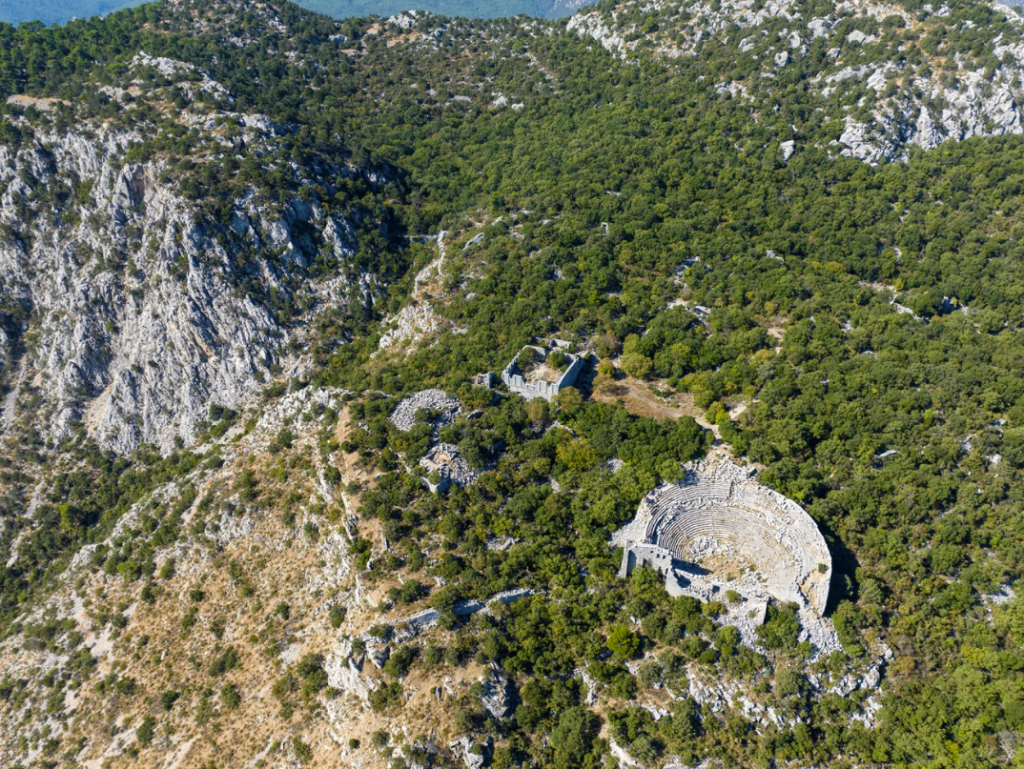
Termessos, Turkey – Alexander the Great tried to conquer Termessos but failed. Today, the incredible deserted ruins of this once-powerful city, perched like a fortified eagle’s nest high in the mountains of southwestern Turkey, can be conquered by anyone willing to make the hike up here.
But few people ever do.
Termessos stands empty. A spectacular archeological jewel, preserved in isolation, seen only by a few handfuls of people who make the trip from the beach resorts of nearby tourism hot spot Antalya.
That’s a shame for those who miss out. For those who do get to explore, it’s a major bonus. They get to wander around one of Turkey’s most impressive ancient cities all by themselves.
It’s a place of incredible atmosphere: history and landscape; views and silence; nature and destruction — all combining to create one of the Mediterranean’s great unsung archaeological wonders.
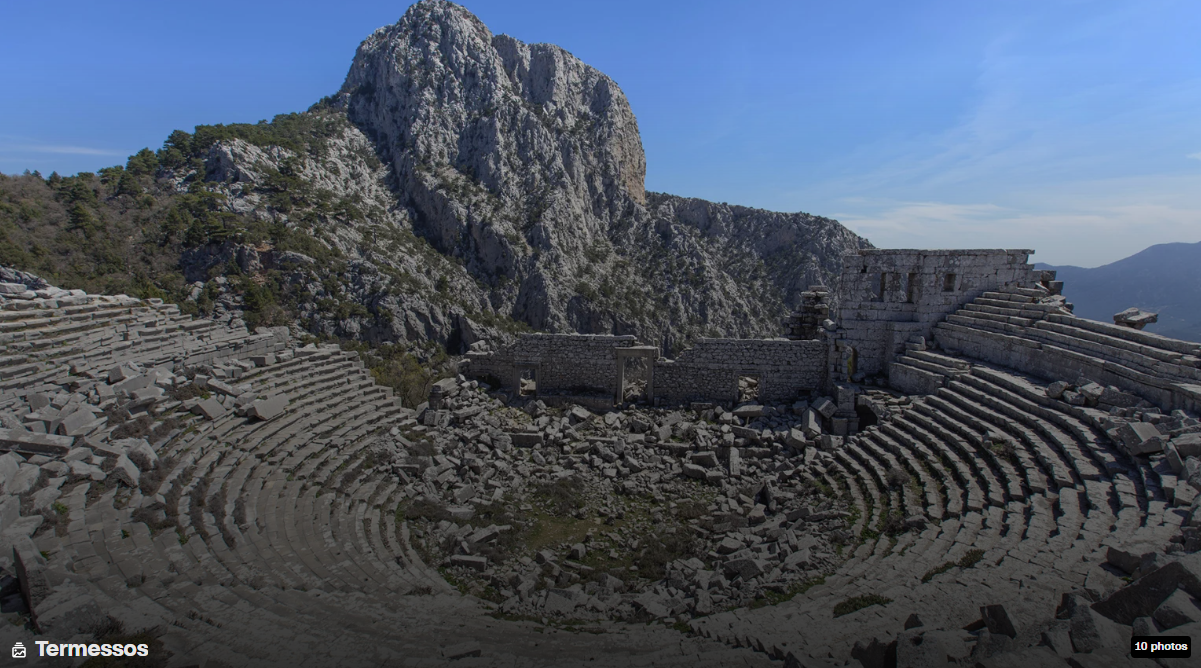
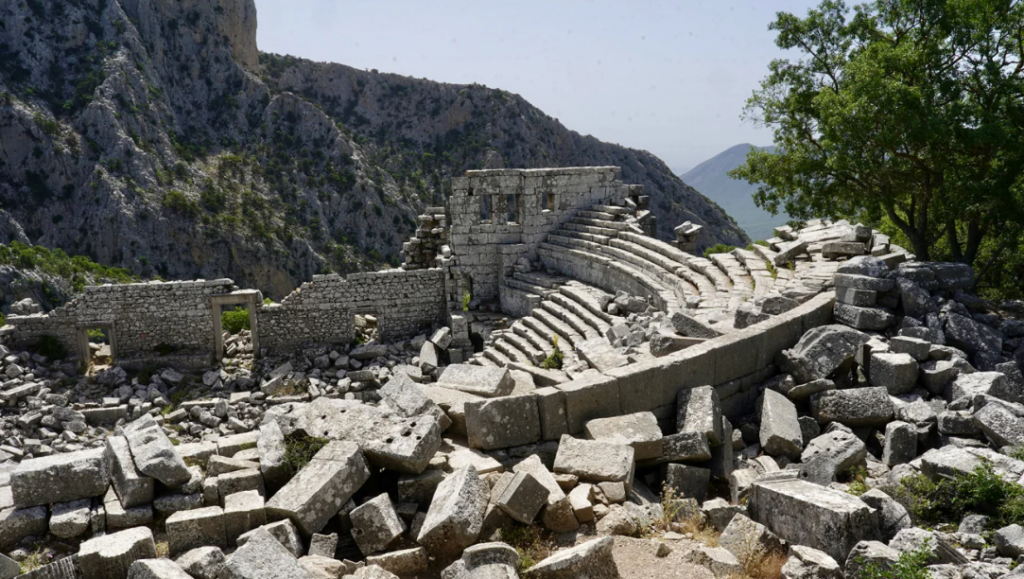
Here, slowly being swallowed by vegetation and worn down by time, are gigantic mausoleums, vast underground cisterns, temples, imposing city walls and a breathtaking theater perched, like Machu Picchu, on a hilltop that offers views stretching for miles all around.
Despite its emptiness, Termessos is easy to reach. It only takes around 45 minutes to drive from Antalya’s traffic-snarled downtown to the gates of Mount Güllük-Termessos National Park — a protected wildlife haven that surrounds the ruins.
After paying a three-euro (about $3) gate fee at the park’s entrance, visitors then face another 10-minute ride further into the pine and gorse-clad hills along a switchback road that reaches about 1,000 meters above sea level.
Eventually the road emerges into what seems like an uninteresting parking lot with a public restroom. This was, in fact, at one time a giant agora, or marketplace for the city, which in its heyday 2,000 years ago would’ve been bustling with traders and citizens.
It’s here where the Termessos adventure begins.
And it begins with death.
Tomb raiders
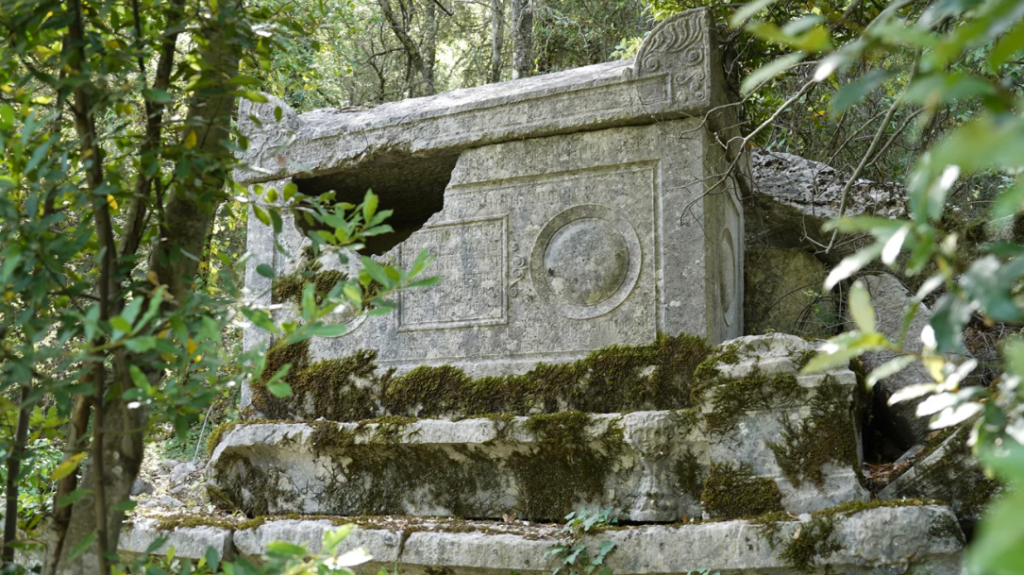
Hidden by vegetation at one end of the agora are the stone-strewn remains of what was clearly once a grand street leading away along the hillside. Instead of houses or shops, this was lined with the tombs of Termessos’ rich and mighty.
Ancient sarcophagi carved with clues to who they once contained, like shields and spears for warriors, lie scattered. Some are small, others huge — offering clues to levels of wealth or power. Some are unfinished, their massive pedestals hinting at what would’ve been.
All of them have been broken into by raiders over the centuries, their walls smashed or lids prised off despite once being locked shut with metal clasps. Tree roots and ivy creepers have also snaked through the stonework.
“The thieves working here were very good at their jobs,” says Önder Uğuz, an Antalya-based art teacher and licensed guide who offers tours of Termessos, which he’s been captivated by since first coming here as a student in 1996 (“It was love at first sight!”).
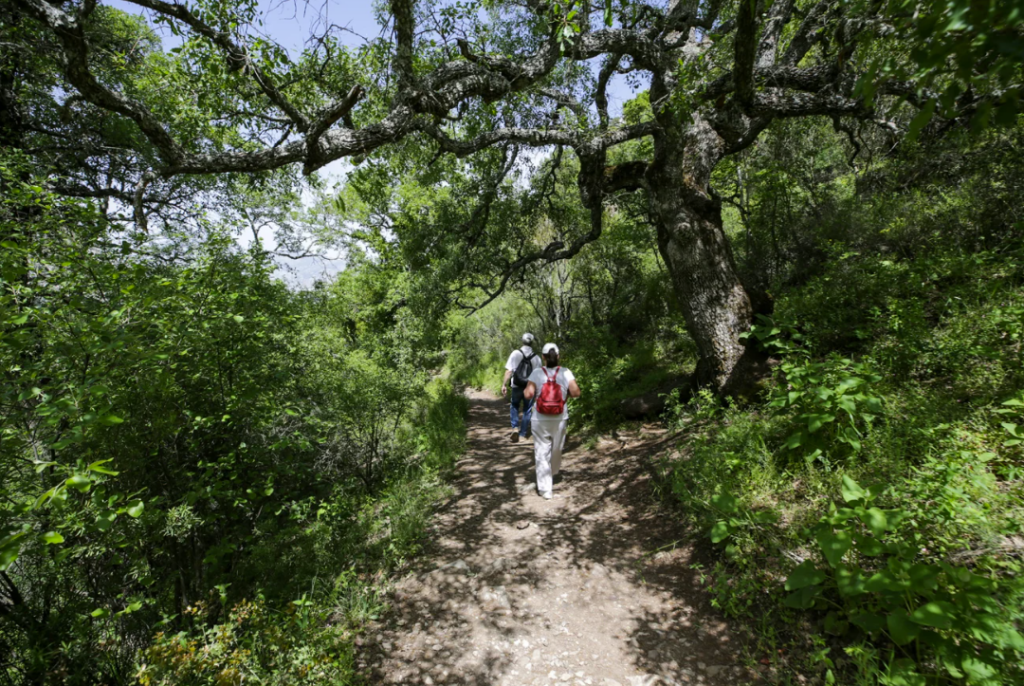
Reaching the heart of the ancient city involves an uphill hike along a leafy pathway that’s a little rough and steep in places. Visitors here need to be equipped with sturdy footwear and OK with mildly strenuous hiking on tricky terrain. In summer, it’s best to visit early before temperatures start to climb, and bring water.
Soon the lower city walls loom into view — a first hint at how well-defended Termessos was when it was built perhaps around the fourth or fifth century BCE, long before the Romans showed up with the engineering skills that would transform the known world.
Which raises the question: how did the people of Termessos do it?
Uğuz laughs off the suggestion of any mystery here. We’re too caught up in the achievements of our technological age to appreciate even the basic abilities of our distant ancestors, in his opinion.
“You and I, we’re nothing without our computers and social media accounts,” he says (shortly after taking a snap for his own Instagram feed). “Take those away and we are helpless. Not these people. They worked with stone for centuries. They had nothing else. Building things like this was what they knew how to do.”
The people of Termessos were known as Solyms, descendants of Luwians, an ancient civilization that was spread across what is now Turkey, but largely overlooked by archaeological scholars until the past few decades. To this day, little is known about the Solyms or when they constructed their city, although with the site’s first-ever excavation announced in 2025, that could be set to change.
The Solyms, however, clearly knew what they were doing. Their choice of location showed a genius for strategic thinking. Not only was it on a major trade route, enabling it to grow wealthy on goods and payments from people heading to and from the Mediterranean, its altitude and commanding views made it easy to defend.
Which is why when Alexander the Great showed up around 333 BCE — when Termessos made its first real appearance in the history books — he was apparently unable to invade or blockade the city into surrender, despite multiple attempts. He reputedly called the city an “eagle’s nest.”
Later, the Romans had more success in controlling the city. Not through force, says Uğuz, but through more insidious means, like offering autonomy under Roman “protection.” “The Romans were like the mafia,” he suggests.
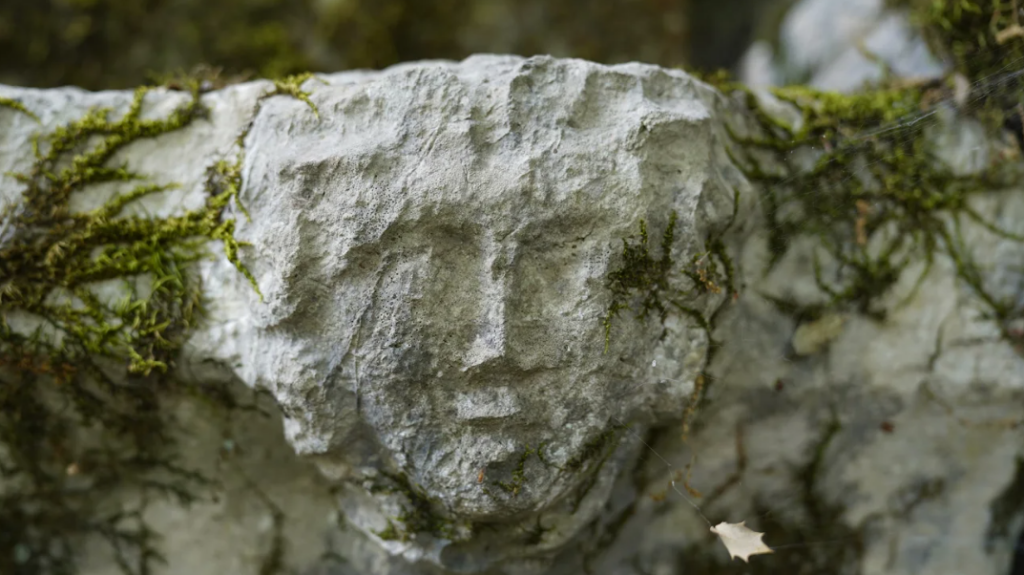
Fight school
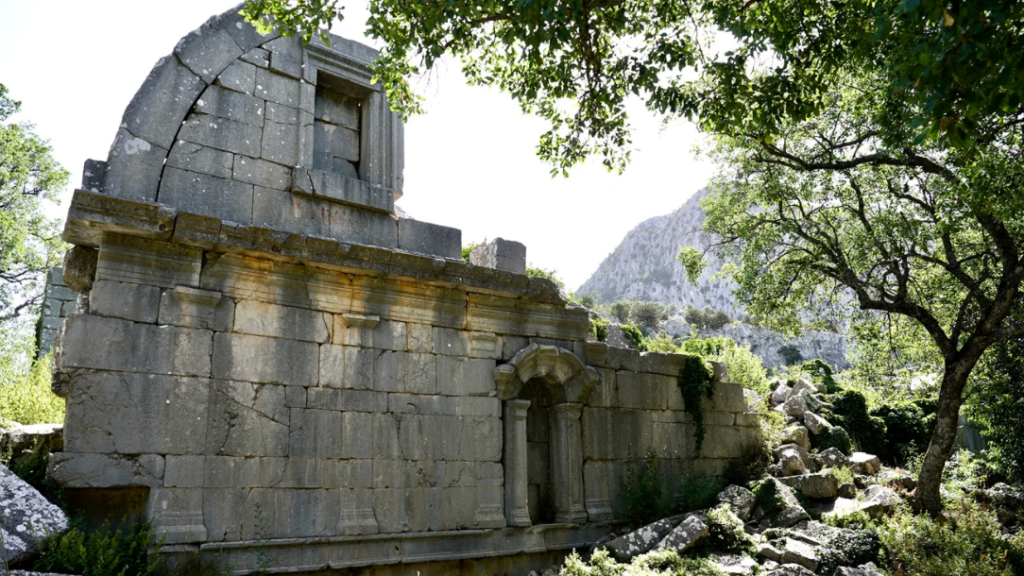
Climbing higher up the hillside on a rocky path sprouting with fragrant wild sage, there’s more evidence of how sophisticated life in Termessos would’ve been. To the left, there’s the marble ruins of the city’s gymnasium, a kind of college campus for trainee soldiers, complete with bathhouse and refectory.
Some of the main building is still intact, with indications that impressive arches once ran across its front wall. Inside were two floors, plus a subterranean vault for storage. In front is the palaestra, an area that would’ve been used for wrestling and combat training and which today is littered with pieces of the gymnasium’s terracotta roof tiles.
It is, of course, mostly derelict. Termessos was believed to have been destroyed by an earthquake the exact date of which is not known, but possibly the 4th or 5th century. What remains is not the work of archeological reconstruction. It’s the genuine state the building has been left in for the past 1,600 years.
Here, on our visit in in June 2024, the silence and emptiness of the place allow the imagination to wander — bringing those warriors back to life and allowing visualization of their mock battles in a place that has changed so little over time.
The excavation work begun in the summer of 2025 will focus on the mausoleum, the necropolis road, ancient water structures and the Hadrian Gate, reports Hürriyet Daily News.
“One main necropolis road stretches 400–500 meters, lined with tombs and sarcophagi, many toppled. We’ll restore podiums and reassemble them. Two waterworks structures will also undergo cleaning and repair,” the leader of the excavation, Mustafa Koçak of Antalya Bilim University, told the Turkish newspaper.
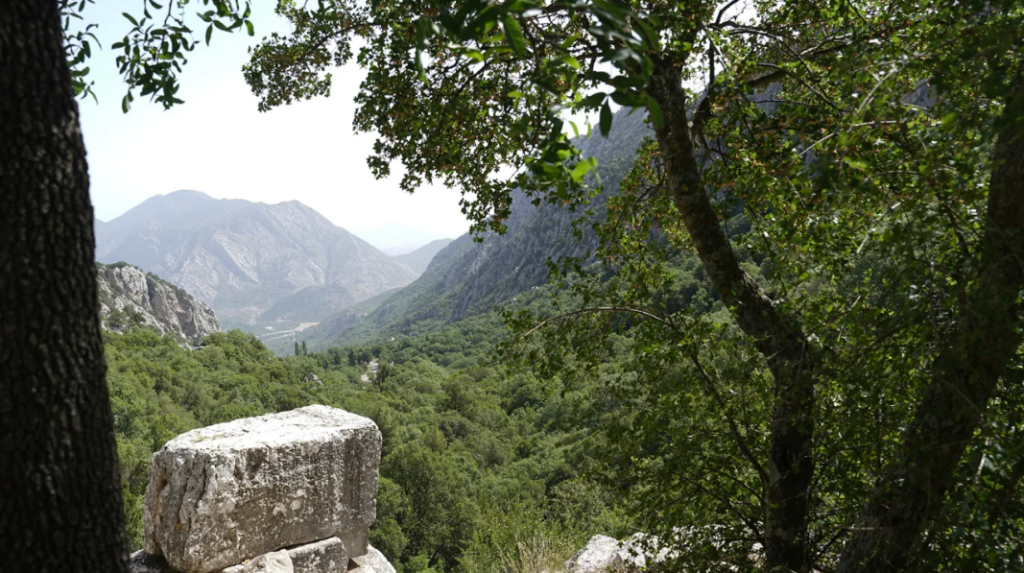
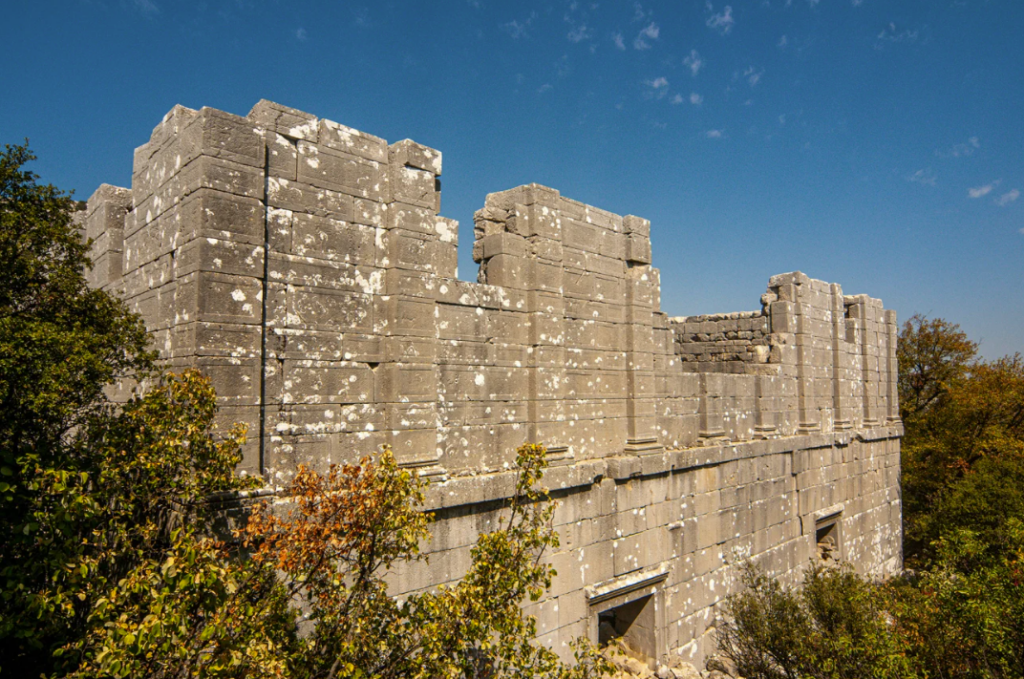
Further up, the upper city walls give commanding views of the forest below and offer a good vantage point over anyone trying to sneak up for an invasion. Beyond them is more evidence of civilization.

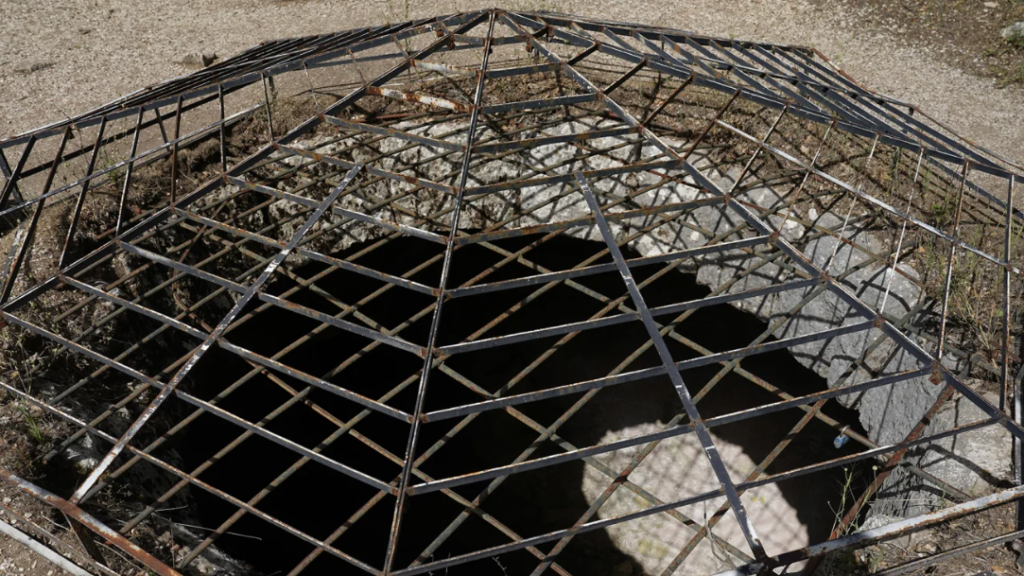
There are the remains of a covered water drainage system. And for a city that had few water sources, they are one of its most impressive assets — gigantic multi-chambered underground cisterns carved by hand into solid rock and lined with plaster.
Capable of holding up to 1,500 tons of water, these cavernous containers would’ve been vital to the survival of a city that had few natural sources of H2O — especially when Alexander the Great was mounting blockades. Today, they’re filled with broken columns and other rubble, likely dumped there when the city was abandoned. There’s speculation water shortages could’ve been behind a decision to finally relocate the city elsewhere.
Luxury shops
Nearby, there’s the imposing outer wall of the bouleuterion or assembly house that would’ve been the city’s seat of power, another central agora dating back to pre-Roman times and the ruins of a colonnaded street that once housed the city’s most exclusive shops.
“This is the Champs-Élysées of Termessos,” says Uğuz. Like the Parisian upscale retail boulevard, this would’ve been where the wealthy spent their cash, he explains. The finest olive oils, cloths, leather goods and items imported from all around the Mediterranean would’ve been on sale here.
These are all sideshows to the city’s showstopper attraction: the theater.
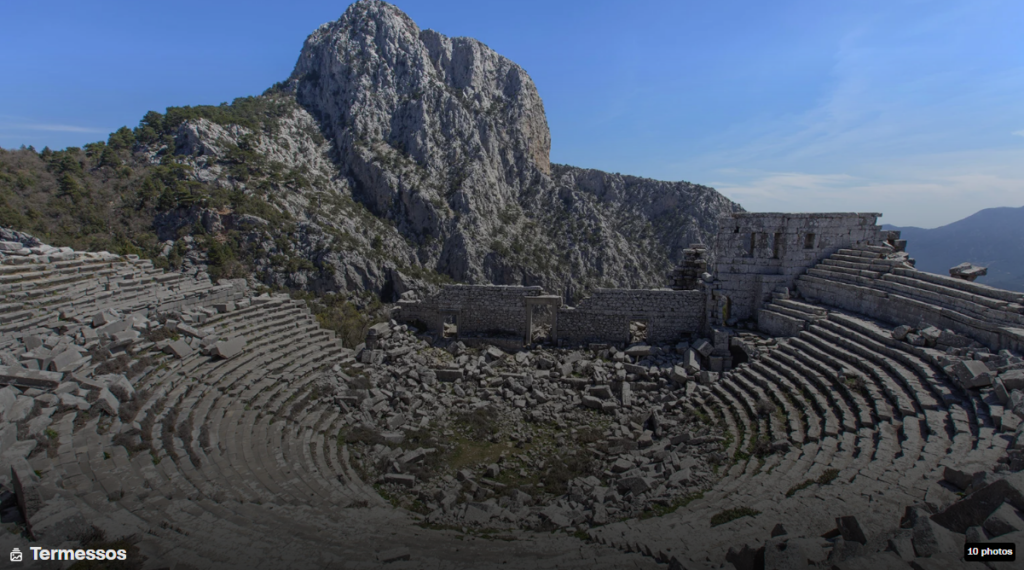
After a last scramble over huge slabs of marble, the view opens up onto an epic panorama of the large performance space, perched on the city’s highest point.
The setting is breathtaking, with mountain ravines cascading away on either side. The sheer drop behind the theater’s upper walls is dizzying. It’s a reminder to be careful when exploring ruins that haven’t been fenced off for safety.
With room for about 4,000 people, the semi-circle of stone terraces faces the ruins of what would’ve been a stage. The theater probably predated the arrival of the Romans, but was later updated along Roman lines.
In Termessos, the location is particularly significant, as it sits opposite a mountain that was once sacred to the city’s inhabitants. It’s easy to see why this was such a hallowed spot, with views that, on haze-free days, stretch as far as the port of Antalya.
And again, it’s a place to sit and imagine what life was like nearly 2,000 years ago, when such theaters would’ve been used by the Romans as, according to Uğuz, a propaganda tool — a soft force to keep their empire in check.
As history lessons go, this is pretty spectacular.
Uğuz (who can be contacted via email: onder.uguz@gmail.com) says he never tires of exploring Termessos. He also offers tours of other more popular archaeological sites in the area, but the tranquility and beauty of this hidden ancient wonder draw him back time and again. He particularly loves soaking in the vistas from the city’s upper walls.
“Usually, I’m sitting there with my wife, under a juniper tree in springtime, a beautiful blue sky with this great scenery,” he says, adding that year-round, the solitude offered by Termessos is also an attraction.
“For me it’s perfect. Just you and nature; little squirrels and archaeology. The only thing missing is a cold beer.”
Horizontes Hídricos 2025: Cómo la Nueva Ley General de Aguas Redefine la Inversión Inmobiliaria Sostenible en México
Como profesional con una década de experiencia en el vertiginoso mundo del desarrollo inmobiliario mexicano, he sido testigo de primera mano de cómo el panorama de nuestra industria está en constante evolución. Si bien factores macroeconómicos, tendencias de mercado y preferencias del consumidor siempre han marcado el rumbo, en este 2025, hay un elemento que se ha erigido como un pilar ineludible y transformador: la implementación de la Nueva Ley General de Aguas. Esta legislación no es meramente un conjunto de reglamentos; es un marco que redefine la certidumbre, la sostenibilidad y, en última instancia, la viabilidad de cualquier proyecto inmobiliario en México.
México, una nación bendecida con una vasta geografía y riqueza cultural, se enfrenta a una paradoja hídrica cada vez más apremiante. El crecimiento demográfico explosivo, la urbanización acelerada y los patrones erráticos del cambio climático han exacerbado la presión sobre nuestros recursos hídricos. Las sequías prolongadas en el norte, la sobreexplotación de acuíferos en el centro y los desafíos de gestión en el sur, son realidades que el sector inmobiliario México 2025 no puede ignorar. En este escenario, la disponibilidad y el acceso al agua han pasado de ser una preocupación secundaria a un factor crítico de riesgo y una oportunidad estratégica para la inversión inmobiliaria sostenible.
La discusión y subsecuente promulgación de la Nueva Ley General de Aguas no fue un camino sencillo. Refleja un entendimiento profundo de que el agua, como derecho humano y recurso estratégico, requiere una gestión integral y transversal. Para nosotros, los desarrolladores y FIBRAs sostenibles, la ley representa mucho más que una directriz ambiental; es la hoja de ruta para construir un futuro más resiliente. Su enfoque holístico, que articula el acceso, la gestión y la planeación hídrica, es precisamente lo que el desarrollo hídrico urbano de México necesitaba para avanzar. La apertura mostrada por las autoridades, en particular el diálogo con la presidenta Claudia Sheinbaum y la Comisión Nacional del Agua (Conagua), ha permitido que las necesidades técnicas y operativas de nuestro sector sean consideradas, un hito que no podemos subestimar.
Certidumbre Hídrica: El Nuevo Cimiento para la Inversión Inmobiliaria
Uno de los mayores obstáculos para la inversión inmobiliaria en regiones con estrés hídrico ha sido la falta de certidumbre jurídica agua. Antes, la ambigüedad en los marcos regulatorios y los largos procesos para obtener los permisos de uso de agua podían paralizar proyectos de gran envergadura o exponerlos a riesgos financieros significativos. La Nueva Ley General de Aguas, en su espíritu de 2025, busca disipar esa niebla de incertidumbre. Al establecer reglas claras para la asignación, transmisión y gestión de derechos de agua, la ley proporciona un terreno más firme para la planeación a largo plazo.
Esto se traduce en varios beneficios tangibles. Primero, los inversionistas pueden evaluar con mayor precisión el riesgo hídrico inversión asociado a sus proyectos, permitiendo una toma de decisiones más informada. Segundo, se agilizan los procesos administrativos, reduciendo los tiempos y costos de desarrollo. Y tercero, al promover la transparencia en la gestión de los recursos hídricos, la ley fomenta un entorno más atractivo para la inversión inmobiliaria sostenible. Los mecanismos que facilitan la transmisión de derechos de agua, por ejemplo, son cruciales para aquellos desarrollos que requieren nuevas fuentes o reasignaciones, garantizando que el crecimiento urbano pueda avanzar sin comprometer el acceso de otras comunidades o la sostenibilidad del recurso. Como experto, puedo afirmar que la claridad regulatoria en materia de agua es tan vital como la posesión de la tierra para el éxito de un desarrollo. Sin esta certidumbre jurídica, el capital simplemente buscará horizontes menos complejos.
Sostenibilidad y Eficiencia: El Estándar Obligatorio del 2025
El concepto de eficiencia hídrica inmuebles ya no es una opción de valor agregado; con la Ley General de Aguas, es un imperativo. La legislación actual impulsa activamente la adopción de prácticas y tecnologías hídricas innovadoras en el diseño, construcción y operación de cualquier tipo de desarrollo. Esto incluye desde sistemas avanzados de recolección de agua pluvial para usos no potables, hasta el tratamiento y reúso de aguas grises en complejos residenciales, comerciales e industriales. La ley, inteligentemente, reconoce que el uso responsable del agua no solo es una obligación ética, sino también una ventaja competitiva.
La implementación de estas medidas de eficiencia tiene un doble impacto. Por un lado, reduce la presión sobre las fuentes tradicionales de abastecimiento, contribuyendo a la seguridad hídrica regional. Por otro lado, ofrece beneficios económicos directos a los desarrolladores y usuarios finales. Inmuebles equipados con soluciones innovadoras agua presentan menores costos operativos a largo plazo, una característica sumamente atractiva para arrendatarios y compradores en un mercado cada vez más consciente. Además, la valoración propiedades sostenibles está en ascenso. Los mercados financieros y los consumidores premian aquellos proyectos que demuestran un compromiso genuino con la sostenibilidad, lo que se traduce en un mayor valor de reventa y una mejor imagen corporativa para los desarrolladores. Estamos viendo cómo la legislación hídrica México está impulsando un verdadero mercado inmobiliario verde, donde la rentabilidad y la responsabilidad ambiental van de la mano.
Planeación Estratégica Hídrica y Adaptación Regional
La Nueva Ley General de Aguas va más allá de la regulación puntual; promueve una gestión integrada recursos hídricos que vincula directamente el crecimiento urbano con la disponibilidad real del agua. Este enfoque de planificación urbana hídrica es vital para evitar el desarrollo desordenado y las crisis futuras. La ley obliga a los municipios y estados a incorporar consideraciones hídricas en sus planes de desarrollo territorial, asegurando que los nuevos proyectos no sobrepasen la capacidad de carga hídrica de una región.
En un país tan diverso como México, donde las condiciones hídricas varían drásticamente de una cuenca a otra, la capacidad de adaptación regional de la ley es fundamental. Se reconocen las particularidades locales y se promueven soluciones a medida, lo que implica una colaboración estrecha entre autoridades federales, estatales y municipales, así como el sector privado y las comunidades. Esta visión colaborativa no solo optimiza el uso del recurso, sino que también fomenta la resiliencia hídrica urbana. Para los desarrolladores, esto significa que el éxito de un proyecto dependerá cada vez más de su capacidad para integrarse armónicamente con la realidad hídrica local y para proponer proyectos hídricos inmobiliarios que demuestren un entendimiento profundo del ecosistema circundante. Mi experiencia me dice que los proyectos que adoptan esta visión integrada desde su concepción son los que logran mayor aceptación y menor resistencia social y regulatoria.
El Rol Crucial del Sector Privado: FIBRAs y Desarrolladores a la Vanguardia
El sector privado, y en particular las FIBRAs y los grandes desarrolladores, están en una posición única para ser catalizadores de la transformación que propone la Nueva Ley General de Aguas. Las FIBRAs sostenibles, por su propia naturaleza de vehículos de inversión a largo plazo, tienen un incentivo directo para asegurar la viabilidad de sus activos. Esto se traduce en una mayor inversión en infraestructura hídrica inteligente, desde sistemas de monitoreo y control de fugas en tiempo real, hasta la implementación de plantas de tratamiento de vanguardia dentro de sus portafolios de propiedades.
Amefibra, la Asociación Mexicana de Fibras Inmobiliarias, ha sido una voz proactiva en este diálogo, demostrando el compromiso del sector con el cumplimiento normativo agua y la búsqueda de las mejores prácticas. Esta colaboración con las autoridades es esencial para afinar los mecanismos de la ley y asegurar que su implementación sea efectiva y benefactora para todos. Los modelos negocio agua real estate están evolucionando; ya no es suficiente construir, sino que hay que operar de manera eficiente y responsable. Las empresas que lideren esta transición no solo cumplirán con la ley, sino que también cosecharán los beneficios de una reputación mejorada, un menor riesgo operativo y un acceso preferencial a financiamiento verde inmobiliario, que es cada vez más accesible y competitivo.
Desafíos y Oportunidades: El Futuro Inmobiliario de México
Si bien la Nueva Ley General de Aguas presenta un marco prometedor, no está exenta de desafíos. La correcta aplicación de la ley a nivel local, la capacitación de los organismos operadores de agua, y la superación de barreras burocráticas seguirán siendo puntos críticos en los años venideros. Sin embargo, en cada desafío hay una oportunidad de inversión inmobiliaria para aquellos con visión y capacidad de adaptación.
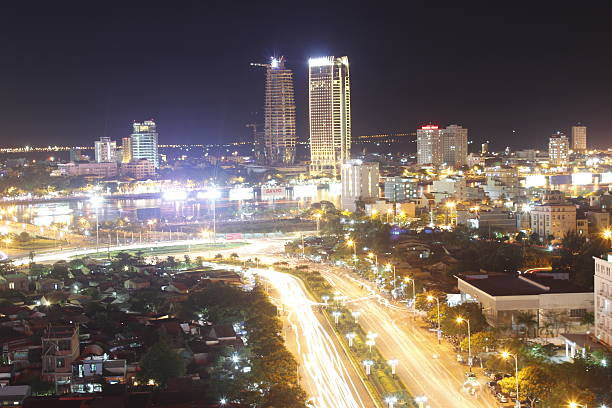
El futuro inmobiliario México se perfila como uno donde la resiliencia y la sostenibilidad no son solo características deseables, sino requisitos fundamentales. Los proyectos que incorporen desde el diseño conceptos de “agua cero” o “agua positiva”, que generen más valor del que consumen, serán los que definan el estándar. Las empresas que inviertan en investigación y desarrollo de nuevas tecnologías hídricas innovadoras, que formen alianzas estratégicas con empresas especializadas en gestión del agua, y que demuestren liderazgo en desarrollo urbano resiliente, serán las que prosperen. México tiene la oportunidad de posicionarse como un referente global en cómo el desarrollo inmobiliario puede coexistir armoniosamente con la gestión sostenible del agua. La Ley General de Aguas es el catalizador para que esta visión se convierta en una realidad palpable.
Hacia un Futuro Hídrico y Urbano Resiliente: Su Próximo Paso
En este 2025, la Nueva Ley General de Aguas no solo ha llegado para quedarse, sino que ha grabado su marca indeleble en la forma en que concebimos y ejecutamos el desarrollo inmobiliario México. Ha transformado la incertidumbre en un llamado a la acción, la escasez en un motor para la innovación, y la sostenibilidad de un concepto abstracto en una métrica concreta de valor. Para nosotros, los profesionales del sector, esta ley representa una formidable oportunidad de inversión agua y un compromiso ineludible con el futuro de nuestra nación.
Si su empresa busca no solo cumplir con la nueva normativa, sino realmente liderar la vanguardia de la inversión inmobiliaria sostenible en México, es imperativo actuar ahora. La planificación estratégica hídrica no es un apéndice de sus proyectos, sino su corazón. Le invitamos a explorar cómo las soluciones innovadoras agua pueden redefinir el valor y la resiliencia de sus próximos desarrollos. Conéctese con expertos, invierta en tecnología de punta y sea parte de la construcción de un México más verde, próspero y seguro hídricamente. El momento de transformar el desafío del agua en una ventaja competitiva es hoy.