


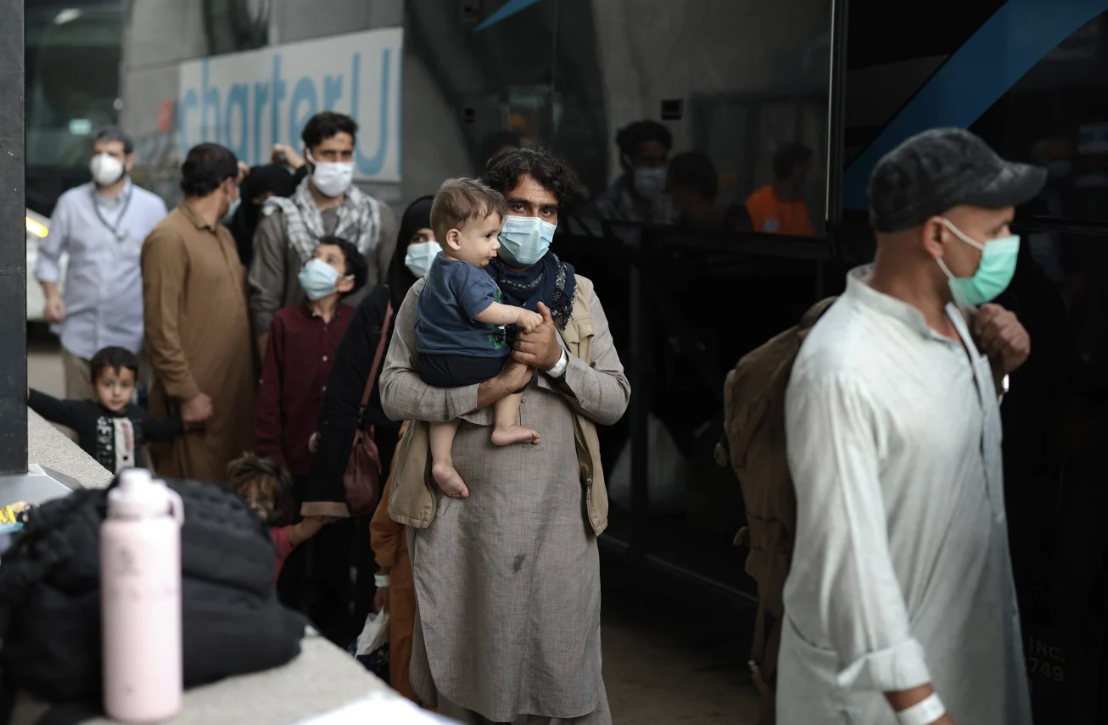

(Anna Moneymaker/Getty Images)
When the announcement broke that the Trump administration would halt and rereview immigration cases for certain refugees who arrived during the Biden presidency, Jafar Wahidi’s phone started ringing nonstop.
“People are really concerned about this,” Wahidi said. “They are really worried.”
Wahidi helps run Afghan Hope Community Development, a volunteer-led nonprofit that assists Afghan refugees and families in the Sacramento, California, area. They’ve helped more than 5,000 Afghan families in the past five years, he says, and the fear spread almost instantly, and well before the shooting near the White House.
“Even people who are here legally, they are calling me because they are afraid,” Wahidi said.
One family called him asking whether they should still plan to attend their citizenship test in early December. Others, already scheduled for naturalization interviews this month, worry showing up could expose them to scrutiny or arrest.
“People worry any action might cause separation of children or spouse,” Wahidi said. “The communities and the families – they are hopeless, completely.”
From recent arrivals still waiting for work permits or green cards to longtime residents trying to reunite with spouses and children still in Afghanistan or in the region, he says many are now “giving up” on the idea of a stable future in the United States.
After working as an interpreter for the American coalition in Afghanistan, Wahidi resettled in California with his wife and seven children in 2017. Now, he says the life he built may not be available to many he is trying to help.
A one-two punch for Afghans
The panic Wahidi describes is rippling across the Afghan diaspora after a rapid one-two punch of policy shifts and breaking news right before the holidays.
First, an internal memo dated November 21 showed the Trump administration planned to reinterview and rereview refugees admitted under President Joe Biden.
The memo, reported November 24, instructed officers to reassess whether refugees met criteria at the time of admission; allowed for termination of refugee status with no right to appeal; and ordered a hold on pending green card applications for refugees until further notice. A year after refugees are admitted to the country, they are required under US law to apply for permanent status.
Refugee advocates called the move “unspeakably cruel,” warning that threatening to revoke protections could re-traumatize people who had already undergone years of intensive US security vetting.
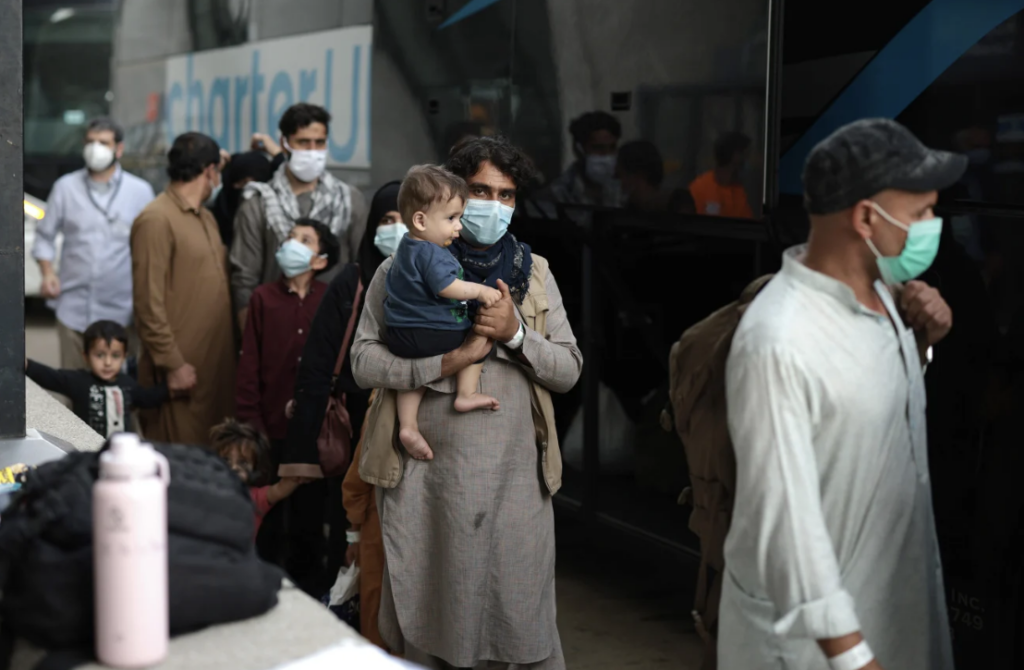
(Anna Moneymaker/Getty Images)
Then came the attack near the White House on November 26 in which two West Virginia National Guard members were ambushed and shot, one fatally. Within hours, after authorities identified the suspect as an immigrant from Afghanistan, US Citizenship and Immigration Services announced it would stop processing all Afghan-related immigration cases “indefinitely pending further review of security and vetting protocols.”
Days later, Trump said the pause in asylum request processing could be in effect for “a long time.” “We don’t want those people,” the president told reporters aboard Air Force One. “You know why we don’t want them? Because many of them are no good and they shouldn’t be in our country.”
The Department of Homeland Security identified the alleged gunman as 29-year-old Rahmanullah Lakanwal, who entered the United States in 2021 through Biden’s Operation Allies Welcome and was granted asylum earlier this year under the Trump administration.
Altogether, more than 190,000 Afghans have been resettled in the US since 2021 under Operation Allies Welcome and its successor, Enduring Welcome, according to the State Department. Another 260,000 Afghans remain abroad waiting for US entry, often in precarious conditions, according to Shawn VanDiver, president of AfghanEvac, an organization that relocates and resettles Afghan people. Many of them are in Afghanistan and face persecution by the Taliban, he told.
‘Something happened. They stopped the process’
Wahidi said he noticed immediate changes on the ground in California when he tried to get in touch with Citizenship and Immigration offices. “No one was answering the phone, no one was responding (to) emails, so then we knew that something happened,” Wahidi said. “They stopped the process.”
Most of his clients are waiting for work permits, green cards or asylum decisions. Clients scheduled for citizenship interviews in early December have flooded his office with questions: Should they still go? Will the appointments be canceled? “I told them we don’t have any update,” Wahidi said.
On December 1, Wahidi said, he received an alert from the nonprofit NorCal Resist warning of what it described as “an increase in ICE arrests of Afghan neighbors,” claiming multiple Afghans had been detained at the Sacramento Immigration and Customs Enforcement field office and many others had been called to report immediately. “A young Afghan mother of a toddler was placed on surveillance through an ankle-monitor,” the alert read, adding a phone number for a legal aid hotline at the bottom.
The alert reflects the level of anxiety gripping Afghan communities in Northern California. Inside Wahidi’s office, he says, the toll is visible. “When they come to our office, we can see it in their faces,” he said. “They are scared.”
Many of the families he hears from are split across continents: a husband in California, a wife and young child in Afghanistan, relatives waiting in Qatar for final visa steps that have now paused indefinitely. “They are worried about their futures,” he said. “Especially for the people who live in Pakistan, in Doha, and here, we completely lost our hope.”
Communities condemn the shooting – and fear stigma
Across the country, Afghan American organizations are trying to balance grief for the National Guard members with deep concern about politicization of the attack.
Joseph Azam, board chair of the Afghan-American Foundation – the largest national Afghan American advocacy organization in the United States – said in a video message anyone responding to the shooting should begin with “unequivocal condemnation” of the “heinous” violence against the two Guard members and their families. But he sharply criticized political leaders and media figures who he said have seized on the attack to generalize about Afghans.
“It has been absolutely disgraceful,” Azam said, to watch people use “this moment of tremendous pain and agony and fear in our country as an opportunity to create division – to scapegoat Afghans, to scapegoat American Muslims, to scapegoat immigrants.”
“Anybody who is able to commit such an abhorrent, horrific and heinous act is committing an act that’s beyond the pale of humanity,” he added. “That is the baseline from which our response should start.”
Azam urged Americans to remember the tens of thousands of Afghan Americans who serve “across our armed forces and in harm’s way,” including some currently serving in the National Guard units now shaken by the shooting – even as their communities face heightened scrutiny.
Other organizations have issued similar calls. AfghanEvac issued a statement within hours of the shooting condemning it and asking Americans to not demonize an entire country because of the actions of one person.
“Those who would twist this moment to attack Afghan families aren’t seeking safety or justice – they’re exploiting division and endangering all of us,” the statement read.
In practice, the sentiment in these communities is they are being left behind.
A grassroots group calling itself the Afghan Coalition of the United States said in a statement to, “for two decades, the Afghan people stood alongside U.S. forces in the fight against terrorism. Thousands of Afghan soldiers, police officers, interpreters, staff, and civilians sacrificed their lives for this shared mission. The wrongdoing of one person must not overshadow this historic partnership and collective sacrifice.”
In limbo and in fear of his life
While Afghans in the United States brace for new scrutiny, Afghans still waiting abroad – including those who once worked closest to American forces – say the freeze has placed them in immediate danger.
Mohammad, a former Afghan National Army officer who asked that his full name not be made public for fear of retaliation, said he spent more than a decade working “shoulder to shoulder with coalition forces.” From 2015 to 2018, he was an escort to Taliban detainees at Bagram Air Base – a role that, he says, left him recognizable to the very people now in power.
Once the Biden administration announced Afghans with active cases could move to a second country for processing, Mohammad says, he got his wife and two young children ready. “Because of that, we sold everything we owned, including our household items, thinking we would be able to leave.”
He said he envisioned his children growing up in California or Virginia, in communities with Afghan families and safe schools.
When the Afghan government collapsed in 2021, he says, the Taliban summoned him for interrogation and later attempted a night arrest. He fled first to the capital, Kabul, then across the border into Pakistan with his family.
In Pakistan, he says, he was accepted into the US P-1 refugee referral program. “It felt like a door to safety had finally opened for me and my family,” he said. “After years of danger, I finally felt hope.”
But instead of advancing, his case stalled. And then, last month, everything collapsed.
On November 25, during Thanksgiving week, Mohammad says the Pakistani government told him he could no longer stay in the country, and he was deported the same day to Afghanistan. His children, ages 5 and 7, traveled with him on what he described as a long, punishing journey back into Taliban-controlled territory.
“Now we have nothing, and we are living in very difficult conditions in someone else’s house,” Mohammed said.
Since returning to Afghanistan, Mohammad says, he has been in hiding, fearing Taliban members might recognize their former jailer.
“If they recognize me, they would hang me,” he said. “My life and my family’s lives are under threat.”
Mohammed says the entire time he worked with US soldiers, there was mutual respect. “Many of them understood the risks we were taking and cared about the Afghan people. We shared the same mission, and their support kept us alive in dangerous situations,” he said.
“I want Americans to know that people like me did not just work a job,” he said. “We put our lives and our families’ lives at risk to stand with them. We believed in the values of safety, freedom and justice. We were their partners, their eyes and ears on the ground. Many of us are still in danger because of that service. We are not asking for favors; we are simply asking for safety and the chance to live without fear.”
With US processing now frozen, he says, he is weighing other options. One of them is Brazil, which created a special humanitarian program for Afghans after the Taliban takeover and has since issued more than 13,000 visas, but now requires local organizations to sponsor each application. Others in a similar situation to Mohammed have told CNN they are also considering Ireland, which has resettled 700 Afghans since 2021 and also requires community sponsorships, and Mexico – the latter on a temporary basis, for its proximity to the United States.
“Right now, the best-case scenario is simple,” he said. “Safety. I hope my family can reach a country where my children can go to school and where I can work and rebuild our lives. If the US can accept us, that would be ideal because my case was already in process there. But any safe country that gives us protection would be a blessing.”
Advocates warn that thousands of Afghans like Mohammad – former partners of US forces who moved to third countries for processing – may now be stranded indefinitely, vulnerable to Taliban retribution and worsening economic hardship.
Back in Sacramento, Wahidi says his community feels abandoned.
“Every day I receive calls from my people – ‘My green card isn’t approved, my asylum isn’t approved, I don’t have food, I don’t have a job,’” he said. “It is too hard for them to live here in America. Now this has made it even harder.”
Afghans who staked their lives on the US mission are now questioning whether the country still wants them, he says.
“We sacrificed for American people and for America and for Afghanistan,” he said, pointing to the thousands of Afghans who were killed while fighting on America’s side. “We hope they help us here, too.”
Fibra Uno: La Visión Estratégica que Reimaginan el Futuro Inmobiliario de México con una Inversión de 50 Mil Millones de Pesos
Como experto en el dinámico mundo de las inversiones inmobiliarias en México con una década de experiencia analizando y anticipando las tendencias del mercado, puedo afirmar que el anuncio reciente de Fibra Uno (FUNO) marca un hito trascendental. En un panorama económico global en constante evolución, y con México consolidándose como un polo de atracción para el capital, la decisión de FUNO de destinar 10 mil millones de pesos anuales durante los próximos cinco años – una asombrosa suma de 50 mil millones de pesos en total – no es solo una declaración de intenciones, sino una hoja de ruta audaz que redefine el concepto de crecimiento y fortalecimiento de portafolios industriales, comerciales y de oficinas a nivel regional. Este plan, que se extiende desde 2025 hasta 2029, promete inyectar una vitalidad sin precedentes en sectores clave, generando oportunidades de inversión real estate que pocos pueden igualar.

El epicentro de este anuncio fue el FUNO Day 2025, un evento celebrado en la capital financiera global, Nueva York. Esta cumbre anual, que congrega a la élite de inversionistas, analistas y líderes de opinión, sirvió como plataforma para desglosar no solo los logros significativos de 2025, sino también la visión de negocio estratégica proyectada hacia 2026 y más allá. Desde mi perspectiva, lo que se presentó no fue meramente un informe financiero, sino una narrativa cohesiva sobre el liderazgo de FUNO, su capacidad de adaptación y su compromiso inquebrantable con la innovación inmobiliaria y la creación de valor a largo plazo. La atmósfera de optimismo era palpable, reflejando el creciente interés global en el potencial de México.
El Impulso Macroeconómico y las Ventajas Competitivas de México en 2025
La solidez de este plan de capital de inversión en México no surge de la casualidad, sino de un análisis riguroso de las fuerzas que moldean nuestra economía. Los directivos de FUNO subrayaron cómo la estrategia se alinea perfectamente con el dinamismo observado en segmentos como el autoservicio, la logística tercerizada y, crucialmente, el comercio electrónico en México. Estos sectores, lejos de ser nichos, representan pilares fundamentales del consumo interno, el cual ha demostrado una resiliencia y un desempeño macroeconómico de México sorprendentemente robustos. Gonzalo Robina, director general adjunto de Fibra Uno, encapsuló perfectamente este sentimiento: “El ánimo de los inversionistas es bastante positivo con respecto a México. Observamos un entorno de estabilidad macroeconómica, creciente demanda en nuestros principales sectores y una oportunidad sin precedentes para seguir desarrollando espacios que acompañen el crecimiento del país.”
Este optimismo no es infundado. En 2025, México se beneficia de una serie de factores convergentes: una ubicación geográfica estratégica, una fuerza laboral joven y calificada, y una red de tratados comerciales que lo posicionan como un hub manufacturero y logístico indispensable. La inversión extranjera directa en México (IED) continúa fluyendo, impulsada en gran medida por fenómenos como el nearshoring y la relocalización de cadenas de suministro. Para un fideicomiso de inversión en bienes raíces (FIBRA) como FUNO, esta coyuntura representa el caldo de cultivo ideal para la expansión, permitiendo no solo la adquisición, sino también el desarrollo de portafolios industriales y comerciales de vanguardia. La capacidad de anticipar estas megatendencias y traducirlas en activos inmobiliarios premium es lo que distingue a FUNO en el mercado.
NEXT: La Consolidación del Liderazgo Industrial y la Expansión Logística
El sector industrial es, sin duda, una de las estrellas de la corona en la estrategia de FUNO para los próximos cinco años. El lanzamiento y la consolidación de su nueva Fibra industrial, NEXT, es un testimonio de la visión estratégica de la compañía. NEXT está en el umbral de convertirse en uno de los tenedores más importantes de activos industriales en México y América Latina, un actor dominante en la provisión de infraestructura logística y naves industriales de última generación. La expansión logística industrial es crucial para el crecimiento del comercio electrónico y la eficiencia de las cadenas de suministro global, y NEXT está posicionada para capitalizar esta demanda creciente.
Actualmente, el proceso para una ampliación de capital por 10 mil millones de pesos para NEXT está en marcha. Esta significativa inyección de capital incluye la contribución de una porción clave del Portafolio Júpiter, propiedad del grupo fundador de Fibra Uno. Esta maniobra no solo fortalece la base de activos de NEXT, sino que también refuerza la confianza de los inversionistas en el potencial de crecimiento a largo plazo del sector industrial. Desde la perspectiva de un experto, la integración de activos de alta calidad como los del Portafolio Júpiter con la visión de NEXT crea una sinergia poderosa, asegurando que la Fibra esté equipada para ofrecer propiedades industriales Clase A que satisfagan las exigencias de las empresas más innovadoras, especialmente aquellas que buscan optimizar sus operaciones a través del nearshoring. La demanda de espacios industriales en corredores estratégicos como el Bajío, la frontera norte y el Valle de México es explosiva, y NEXT está lista para satisfacerla.
El Sector Comercial: Reinvención y Experiencia de Compra en 2025
El sector comercial, históricamente un pilar para FUNO, ha demostrado una notable capacidad de adaptación. A pesar de los desafíos sin precedentes de la pandemia y los cambios en los hábitos de consumo, los contratos de arrendamiento en el portafolio comercial de FUNO registraron incrementos promedio del 7% en pesos y 4% en dólares entre 2019 y 2024. Este rendimiento, lejos de ser estático, refleja una gestión activa y una comprensión profunda de las tendencias de consumo minorista.
La adquisición del Portafolio Apolo fue una jugada maestra que transformó radicalmente la composición del portafolio comercial de FUNO, y es un claro ejemplo de la valorización de bienes raíces comerciales a través de la diversificación estratégica. Si en 2019 la categoría de alimentos y entretenimiento representaba entre el 12% y el 13%, hoy, en 2025, esta categoría ha escalado hasta un impresionante 35%. Esto no es un simple cambio de números; es la cristalización de una estrategia orientada a la experiencia de compra minorista. En la era post-pandemia, los centros comerciales ya no son solo lugares para adquirir bienes, sino destinos para el ocio, la gastronomía y el entretenimiento. FUNO ha sabido interpretar esta evolución de las preferencias de los usuarios, invirtiendo en espacios que fomentan la comunidad y ofrecen valor más allá de la transacción. El retorno de inversión en bienes raíces comerciales que priorizan la experiencia es ahora un factor crítico para el éxito.
El Mercado de Oficinas: Recuperación y la Nueva Era del Trabajo Híbrido
El segmento de oficinas fue, sin duda, el más impactado por la irrupción de la pandemia y la subsecuente adopción masiva del teletrabajo. Sin embargo, en 2025, presenciamos una recuperación del mercado de oficinas que supera las expectativas más optimistas. FUNO reporta una absorción neta de 187 mil metros cuadrados en lo que va del año, un indicador contundente de la reactivación y la consolidación de la ocupación, la cual ha alcanzado un saludable 88%.
Como un experto inmobiliario con una década de experiencia, he monitoreado de cerca esta evolución. Lo que estamos viendo no es un simple retorno a la normalidad, sino una redefinición del propósito de la oficina. Las empresas buscan ahora espacios flexibles de oficina que faciliten la colaboración, promuevan la cultura organizacional y se adapten a modelos de trabajo híbridos. FUNO ha respondido a esta demanda, ofreciendo soluciones que van más allá del simple espacio físico, con inmuebles que incorporan tecnología de punta, diseños adaptables y servicios de valor añadido. La ocupación del 88% es un testimonio del éxito de esta estrategia, posicionando a FUNO como un líder en la adaptación a la nueva era del trabajo y ofreciendo un atractivo rendimiento de FIBRAS a los inversionistas que apuestan por la resiliencia del sector.

Sostenibilidad y el Compromiso ESG: Un Diferenciador Competitivo
En 2025, ninguna estrategia de crecimiento inmobiliario puede considerarse completa sin un firme compromiso con la sostenibilidad y los criterios ESG (Ambientales, Sociales y de Gobernanza). FUNO ha integrado estos principios no solo como un componente de cumplimiento, sino como un pilar fundamental de su propuesta de valor. El 27% de su portafolio total cuenta con algún tipo de certificación ambiental, lo que no solo refuerza su liderazgo en el desarrollo de inmuebles eficientes y responsables con el entorno, sino que también ofrece ventajas tangibles.
Los inmuebles con certificaciones verdes suelen tener menores costos operativos, atraen a inquilinos corporativos con fuertes mandatos ESG y, en última instancia, tienen una mayor valorización inmobiliaria. Desde mi punto de vista, la sostenibilidad inmobiliaria no es una opción, sino una necesidad imperante que impulsa el valor a largo plazo. Este enfoque posiciona a FUNO como un actor visionario, atrayendo a inversionistas que buscan alinear sus carteras con prácticas éticas y responsables, y que comprenden el impacto positivo que tienen las certificaciones ambientales en inmuebles en el rendimiento financiero y social.
Diálogos Estratégicos en el FUNO Day 2025: Perspectivas Clave
El FUNO Day 2025 no fue solo una plataforma para los anuncios internos de la empresa, sino también un foro para el intercambio de ideas con mentes brillantes del panorama económico y político. La participación de ponentes invitados de la talla de Valeria Moy, directora general del Instituto Mexicano para la Competitividad (IMCO), y de Ildefonso Guajardo, exsecretario de Economía, enriqueció enormemente la discusión.
Valeria Moy ofreció un análisis macroeconómico de México 2025 que subrayó la resiliencia del país ante choques externos y la importancia de la estabilidad fiscal para mantener la confianza de los inversionistas. Sus perspectivas sobre el crecimiento potencial y los desafíos estructurales son cruciales para entender el contexto en el que FUNO opera. Por su parte, Ildefonso Guajardo abordó los retos y oportunidades inherentes a la relación bilateral entre México y Estados Unidos, especialmente en el contexto del nearshoring y la relocalización de cadenas de valor. Su experiencia en negociaciones comerciales brindó una visión profunda sobre cómo estos fenómenos geopolíticos se traducen en oportunidades de inversión real estate concretas para México. La sinergia entre la visión de FUNO y el análisis de estos expertos refuerza la solidez de la estrategia de la Fibra.
La Visión a Largo Plazo: Liderazgo y Adaptabilidad en 2025 y más allá
La inversión de 50 mil millones de pesos de Fibra Uno durante los próximos cinco años no es simplemente una ampliación de capital; es una reafirmación de su posición como líder indiscutible en el mercado de bienes raíces de México y América Latina. En un sector que exige visión, agilidad y una profunda comprensión de las fuerzas del mercado, FUNO ha demostrado una y otra vez su capacidad para anticipar y adaptarse. Su enfoque diversificado en los sectores industrial, comercial y de oficinas, respaldado por un compromiso inquebrantable con la sostenibilidad, le permite mitigar riesgos y capitalizar las oportunidades emergentes.
Como profesional en la materia, veo en esta estrategia no solo una senda de crecimiento para FUNO, sino un catalizador para el desarrollo económico de México. La inversión en desarrollo de portafolios industriales modernos, la regeneración urbana a través de centros comerciales experienciales y la provisión de espacios flexibles de oficina de alta calidad son esenciales para la competitividad del país. FUNO no solo construye inmuebles; construye ecosistemas económicos que benefician a miles de empresas y millones de mexicanos. Este es el tipo de inversión inmobiliaria estratégica que impulsa el progreso.
Una Invitación a la Transformación Inmobiliaria
En este vibrante panorama de 2025, donde la innovación y la adaptabilidad son claves, las oportunidades para participar en la expansión logística industrial y en el mercado inmobiliario de México son inmensas. La visión y la audacia de Fibra Uno ofrecen un faro para aquellos que buscan portafolios de inversión diversificados y un impacto duradero.
Invitamos a inversionistas, desarrolladores y a todos los actores interesados en el futuro de los bienes raíces a profundizar en estas proyecciones, a explorar las oportunidades de inversión real estate que el mercado mexicano ofrece con un crecimiento sin precedentes, y a formar parte activa de esta transformación. Descubra cómo su próximo movimiento estratégico puede alinearse con el liderazgo y la trayectoria de Fibra Uno. Para un análisis más detallado de estas tendencias y para explorar cómo puede capitalizar el dinámico mercado inmobiliario de México, contáctenos y permítanos guiar su visión.